INTERVIEW
Always and Only Truth
WITH DRAGOLJUB ZAMUROVIĆ
AN INTERVIEW WITH DRAGOLJUB ZAMUROVIĆ
“The fundamental role of documentary photography is to reveal truth. A photographer may emphasize it through visual means, but must never conceal it.”
Dragoljub Zamurović is a photographer, visual storyteller, and former architect whose career has followed the shifting landscapes of Europe and the world for more than four decades. A long-time member of the Gamma photo agency in Paris, he authored more than ten feature stories and two covers for National Geographic Magazine, and published extensively in LIFE magazine – including a cover image and a number of spreads in the legendary “Big Pictures” section.
With a wealth of experience and hard-won lessons, we put some questions to him. His answers – covering his introduction to photography, how he got into photojournalism, what documentary truth means to him, and how he deals with high stress scenarios – are a must read for any aspiring documentary photographer.
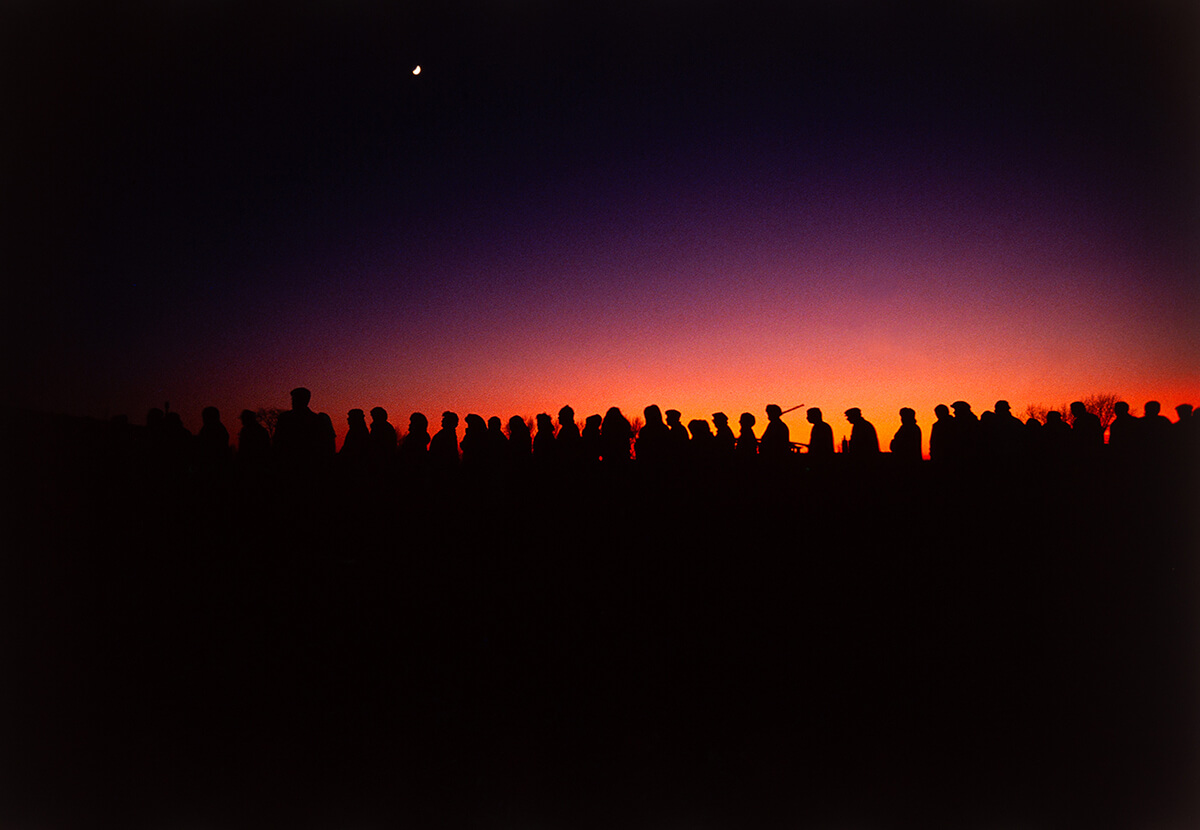
BANNER IMAGE: Belgrade – Civilians Waiting in Line for Food During International Sanctions, January 1994. Prolonged and exhausting international sanctions led to severe food shortages and the lack of basic necessities, leaving many people hungry. Although the sanctions were not the result of the population’s own choices but of political decisions made elsewhere, their consequences were felt directly in everyday life. Long lines formed day and night in front of shops where food was available. With public lighting reduced or nonexistent, people often waited in near darkness, guided only by moonlight.
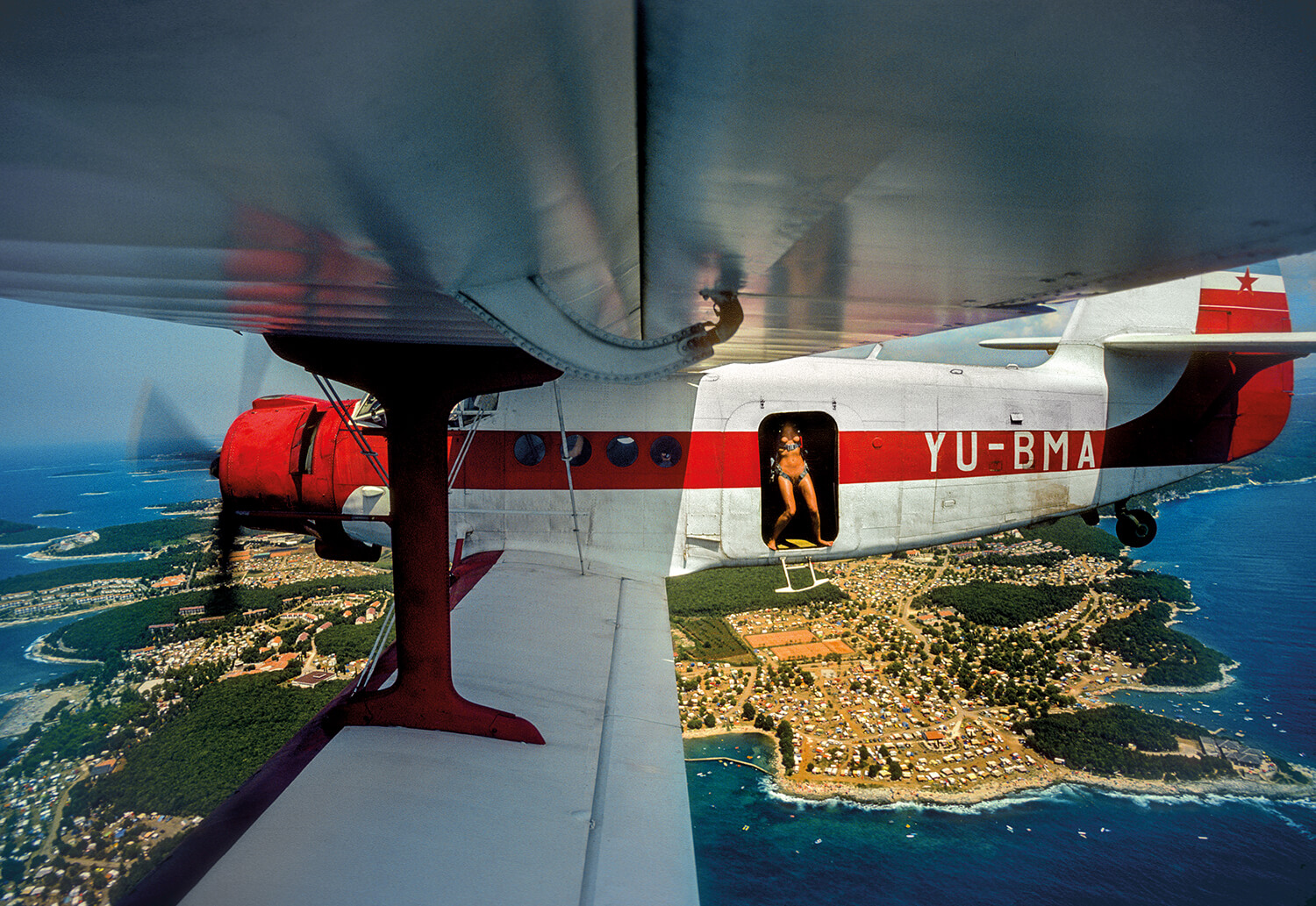
Miss Koversada — Aerial Portrait Above the Adriatic. Photographed from a plane flying over the Koversada naturist camp, this image blends reportage and spectacle: Miss Koversada stands in the open aircraft doorway, suspended above the turquoise Adriatic coast. A moment of fearlessness, youth, and freedom frozen mid-air.
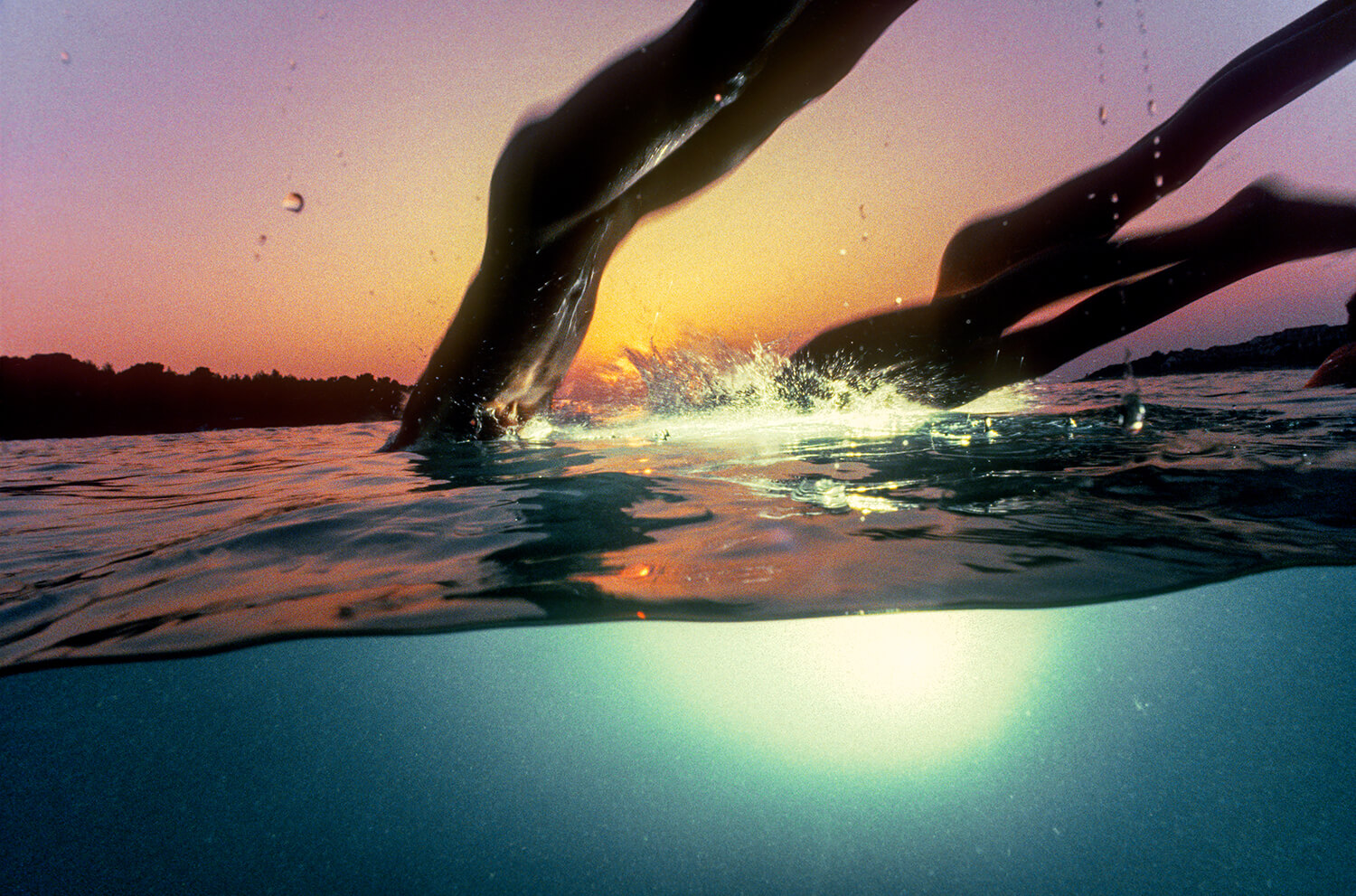
Sunset Dive — Above and Below the Waterline.Captured half above and half below the water’s surface, this photograph shows a diver breaking through the sea at sunset. The glowing sky and deep blue underwater world meet in a single frame, merging motion, light, and summer energy in one fluid gesture.
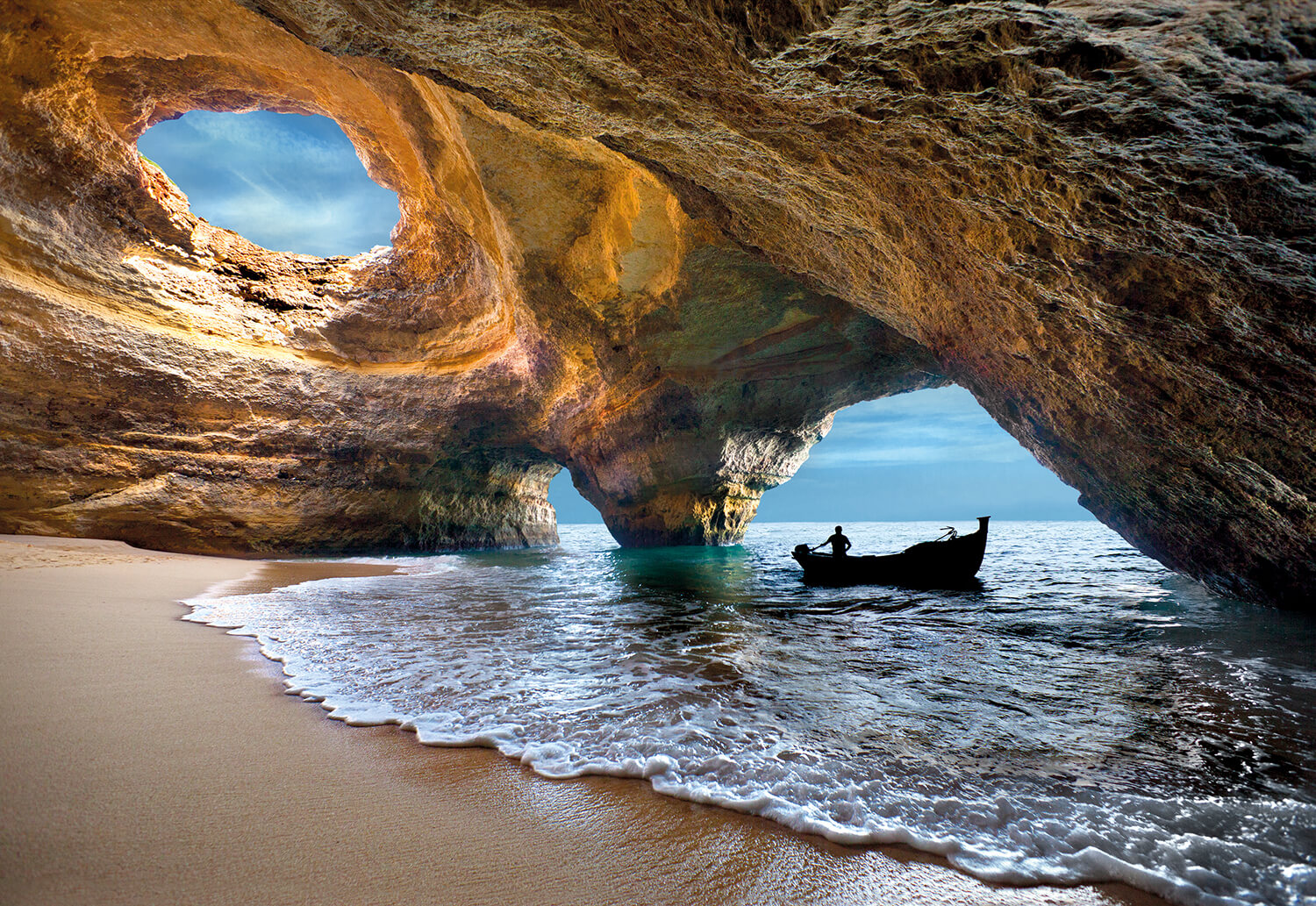
Portugal – Benagil Cave. Inside the Benagil Cave, light pours through the natural skylight like a spotlight on the sea. The lone fisherman entering the cavern becomes a silhouette against the glowing water, turning this geological wonder into a quiet theater of stone, light, and tide.
Dear Dragoljub, perhaps you could begin by introducing yourself and where your love of photography began?
As far back as I can remember, I have been drawing and painting. As a child, I often copied the works of great masters, although high-quality color reproductions were very hard to find at the time. I searched for them everywhere, driven by a desire to understand how those paintings truly looked.
One day, at the age of twelve, I came across several copies of LIFE magazine in an antiquarian bookstore. In one of them, I found a beautiful reproduction of Rubens’ Venus at the Mirror. I bought every copy they had, spending my entire monthly allowance.
At home, I eagerly flipped through the pages hoping to find more reproductions—but instead, I discovered something far more important. I discovered photography. I realized that photography is not just a record of reality, but a creative and expressive medium in its own right. That moment defined the direction of my life.
You began working as a professional photojournalist in the late 1970s. What first drew you to reportage, and what kept you committed to it over so many years?
It was precisely those LIFE photo essays that drew me in, along with the powerful imagery in National Geographic. A friend’s father had been subscribing to the magazine since 1960, and when he saw my passion, he gave me his entire collection. I spent days analyzing those photographs.
I never wanted to copy them. Instead, I imagined myself in the photographer’s position—asking how I would capture the same story, and how I might go even further.
My professional career began when I joined Ilustrovana Politika, which at the time had one of the strongest photography teams in Yugoslavia. I started as a volunteer and soon became a full-time photojournalist.
However, after two years, the economic crisis severely affected print quality, and photography lost its visual impact. I decided to leave and pursue independent reportage, offering my work to international magazines.
My breakthrough came with a story about pre-Olympic Sarajevo, which I sold in Milan. That success opened the door to publishing the same story across multiple countries, followed by other major projects such as Medjugorje, Koversada nudist camp, and Gypsies of the World.
How has your understanding of “documentary truth” evolved over that time?
For me, truth has always been what I see—not what I hear or read.
The fundamental role of documentary photography is to reveal truth. A photographer may emphasize it through visual means, but must never conceal it.
I remember photographing a group of policemen abusing their authority early in my career. There was hesitation about publishing the story, but it was eventually released and even received an award. That experience reinforced my belief that truth must prevail.
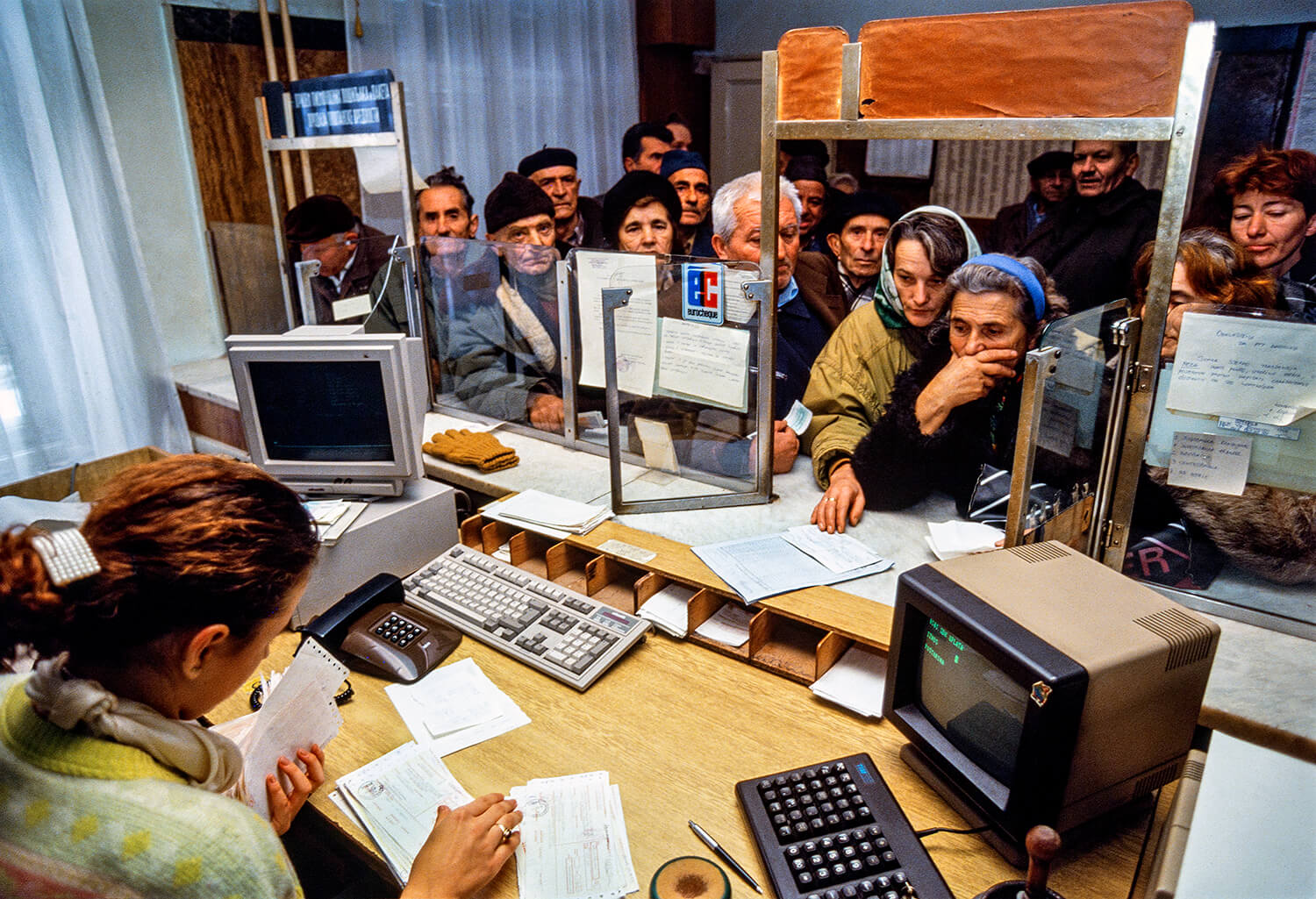
Arandjelovac – Sanctions — Citizens in a Bank During the Economic Embargo, 1992. On May 30, 1992, the United Nations Security Council adopted Resolution 757, imposing a comprehensive international economic embargo on the Federal Republic of Yugoslavia. The sanctions led to a rapid collapse of the economy, hyperinflation, and severe disruption of everyday life. The rush to banks and post offices was overwhelming, as money had to be withdrawn immediately — any delay meant losing its value due to inflation. Payment slips, bank statements, and withdrawal forms reveal the scale of impoverishment. The sanctions did not affect political elites, but primarily ordinary people: pensioners, workers, families and children.
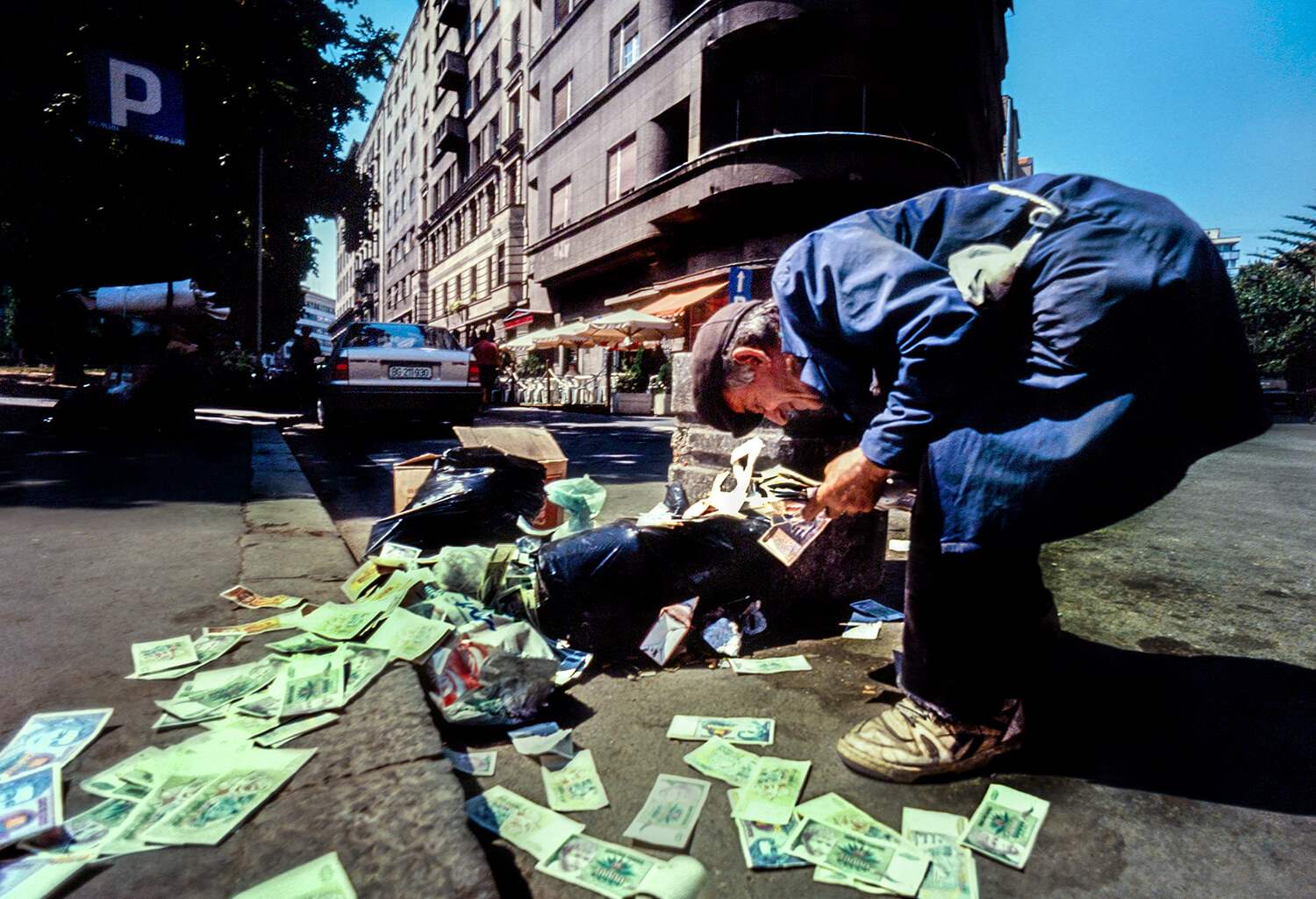
Belgrade – Everyday Life During Hyperinflation, 1993. This photograph shows a man searching through discarded items on a city sidewalk, where devalued banknotes lie scattered among trash bags. The scene reflects the collapse of monetary value, when paper money lost its meaning faster than it could be spent. What had once represented savings and security became street litter, while survival depended on improvisation and endurance.
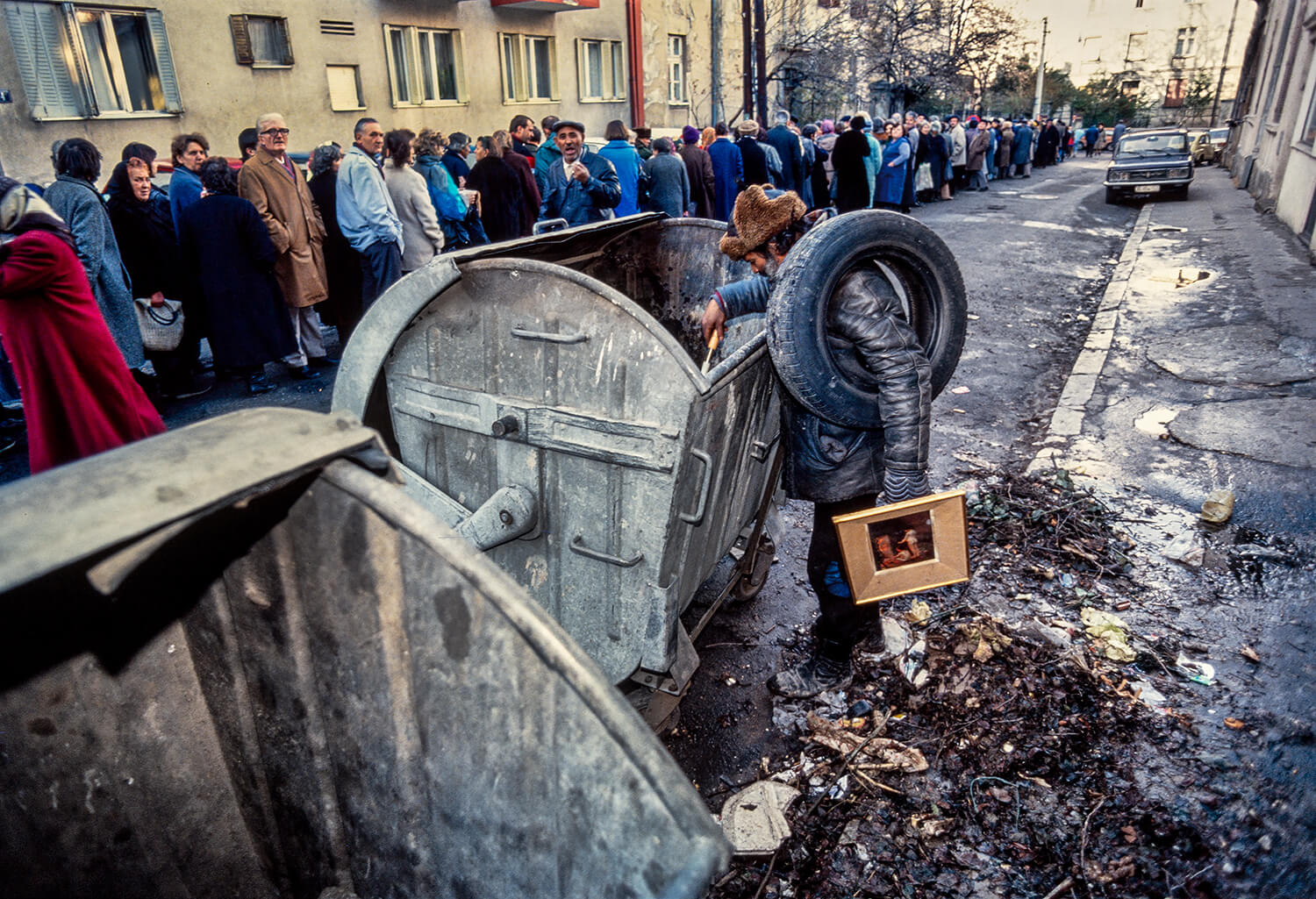
Belgrade – Sanctions — Poverty and Everyday Survival, 1992. The photograph shows a scene from Belgrade: a long line of people waiting patiently, while in the foreground a man searches through garbage containers for usable items. Such scenes became a daily reality during the 1990s, serving as powerful testimony to social collapse, poverty, and the struggle for basic survival.
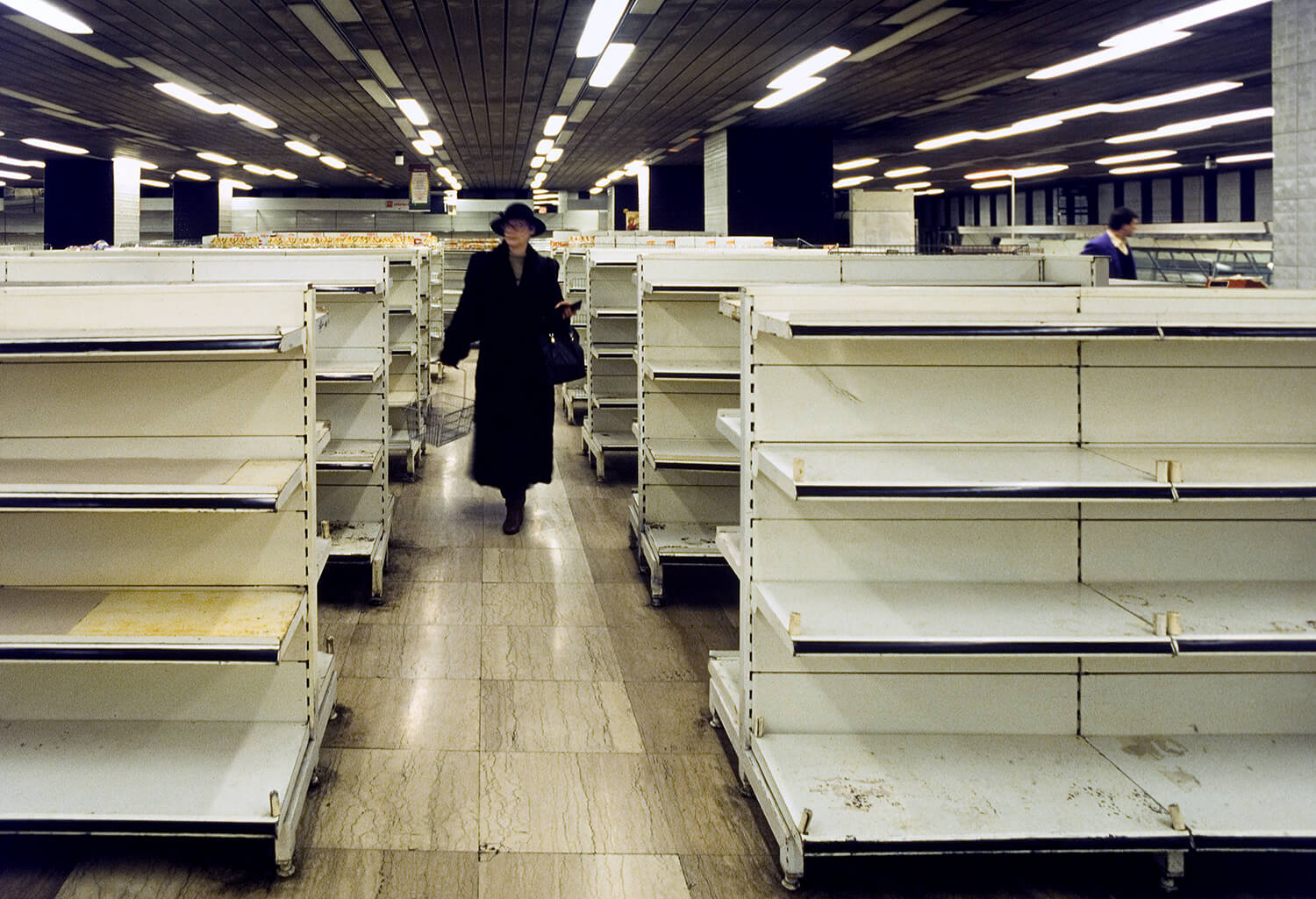
Belgrade – Everyday Life Under Sanctions, May, 1992. Empty store shelves in Belgrade during the first months of international sanctions imposed on the Federal Republic of Yugoslavia. Shortages of basic goods became part of everyday life, as people rushed to buy whatever was still available, often using deferred-payment checks. The photograph records the quiet, everyday impact of sanctions on civilian life.
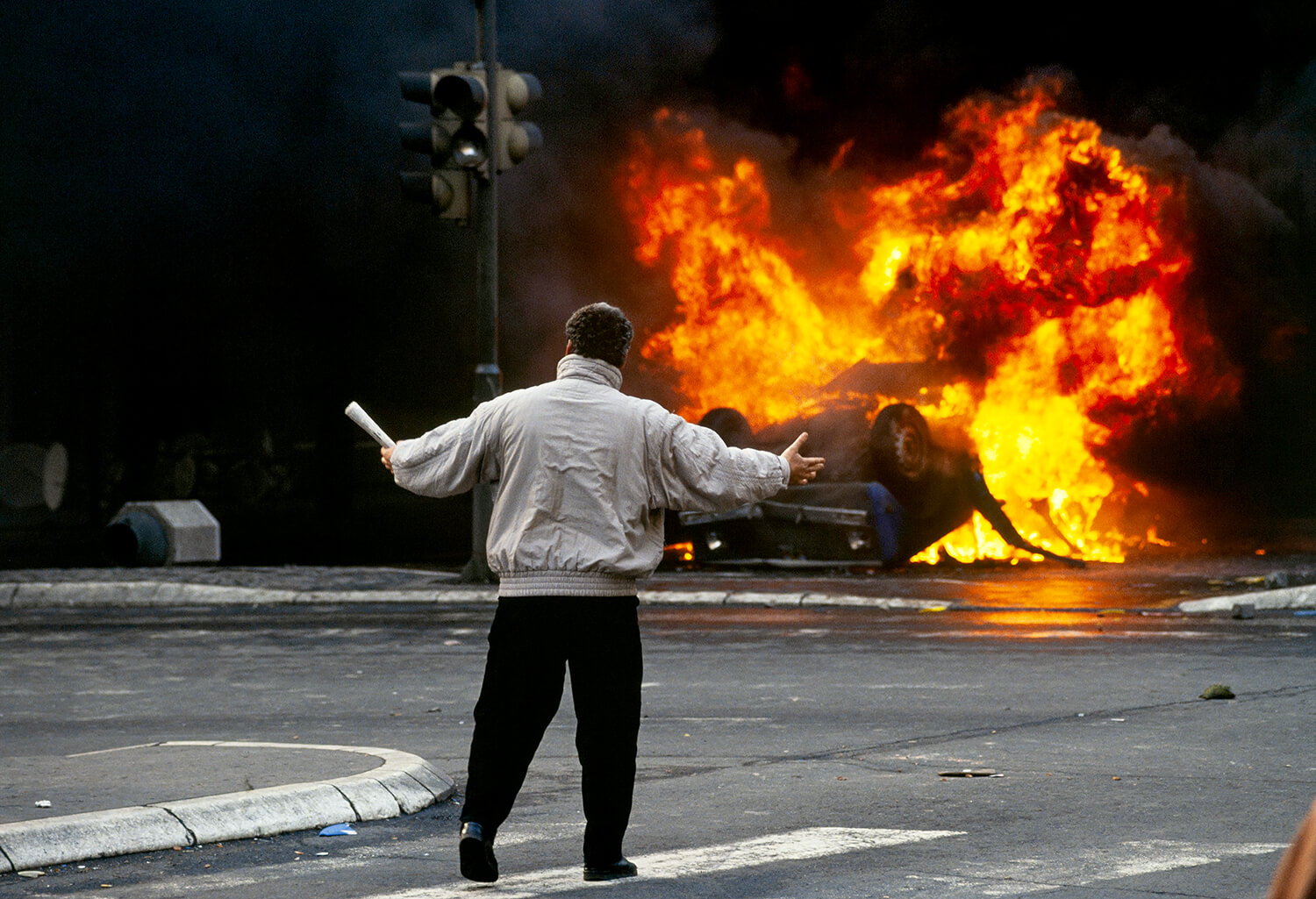
Belgrade – Protest, March 9, 1991. This photograph was taken during the mass protests in Belgrade on March 9, 1991—one of the defining moments of Serbia’s political crisis at the beginning of the 1990s. Following a series of propaganda broadcasts on Belgrade Television, which accused the Serbian opposition of collaborating with extreme pro-Ustaše and pro-fascist forces in Croatia, opposition parties called for a rally at Republic Square. The main demands of the protest were the resignation of the television director Dušan Mitević and the dismissal of four senior editors of the state broadcaster. What began as a public gathering soon escalated into open clashes between demonstrators and police.
Your work has appeared in highly esteemed publications such as TIME, LIFE, and National Geographic. How did you begin working with these outlets? And how did working with them shape your approach to storytelling?
A key turning point was my connection with the French magazine L’Express. One editor advised me to join a strong photo agency—he suggested Gamma.
I arrived unannounced at Gamma Presse Images and, by chance, walked straight into the office of its director, Floris de Bonneville. While he was on the phone, he began reviewing my slides. After a few moments, he stopped the conversation, looked at me, and said: “These photographs are excellent. We would be happy to represent you.”
That moment marked the beginning of a collaboration that lasted over 25 years.
Through Gamma, my work was published worldwide, in over two hundred leading magazines including Time Magazine, Life Magazine, and National Geographic. It profoundly shaped my storytelling—teaching me clarity, narrative strength, and visual precision.
You’ve documented everything from everyday life to conflict and political unrest. How would you prepare, mentally and practically, for photographing unpredictable or high-stakes situations?
Before any assignment, I think carefully about what I want to express. I often sketch potential images, imagining photographs that do not yet exist.
Sometimes I think about a subject late into the night, until—just before dawn—I “see” the image in a half-dream state.
I arrive early, stay late, and observe everything—both the main event and its surroundings.
In dangerous situations, such as war, I adopt a kind of fatalism. I tell myself nothing will happen, and I focus entirely on the act of photographing.
In fast-moving documentary contexts, how do you balance instinct with intention when searching for or composing an image?
I prefer situations where I have time to think, but in fast-moving environments I rely on instinct. After years of experience, instinct becomes a form of knowledge. It allows me to capture what Henri Cartier-Bresson called the “decisive moment.”
And what ethical considerations guide your work when documenting real people and real events, especially in sensitive contexts?
Truth—always and only truth. I sometimes photograph people doing troubling things, especially in wartime. Interestingly, many are not aware of how their actions appear, and some even take pride in them. However, I never photograph people who explicitly refuse to be photographed. I have never been drawn to paparazzi-style photography.
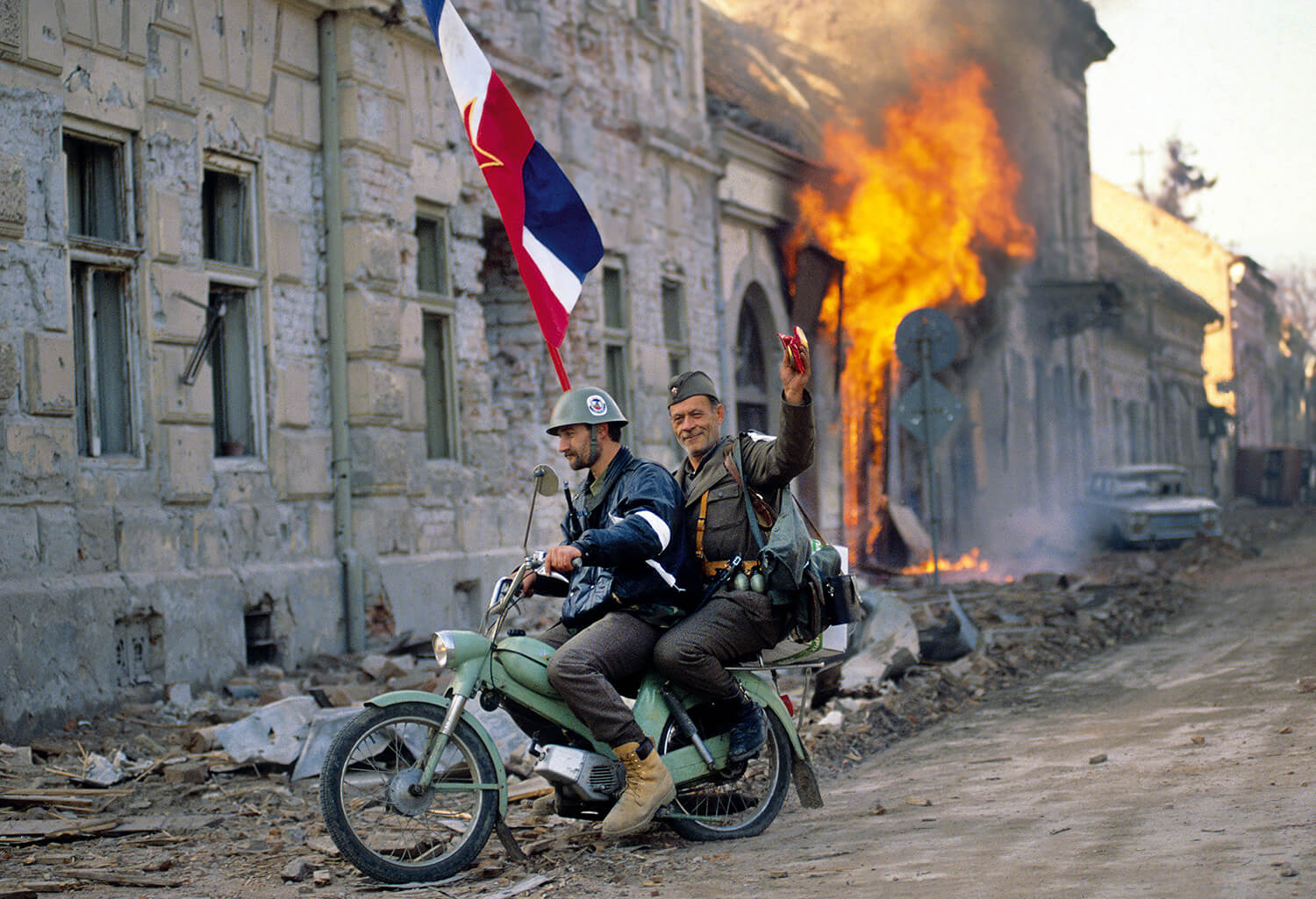
Vukovar – Armed Men Enter Vukovar Amid Burning Buildings, November 18, 1991. Serbian fighters on a motor bike with Serbian flag among the ruins of Vukovar after a three-month battle between the Croatian armed forces and the Yugoslavian Federal Army which completely destroyed the city and killed thousands of civilians.
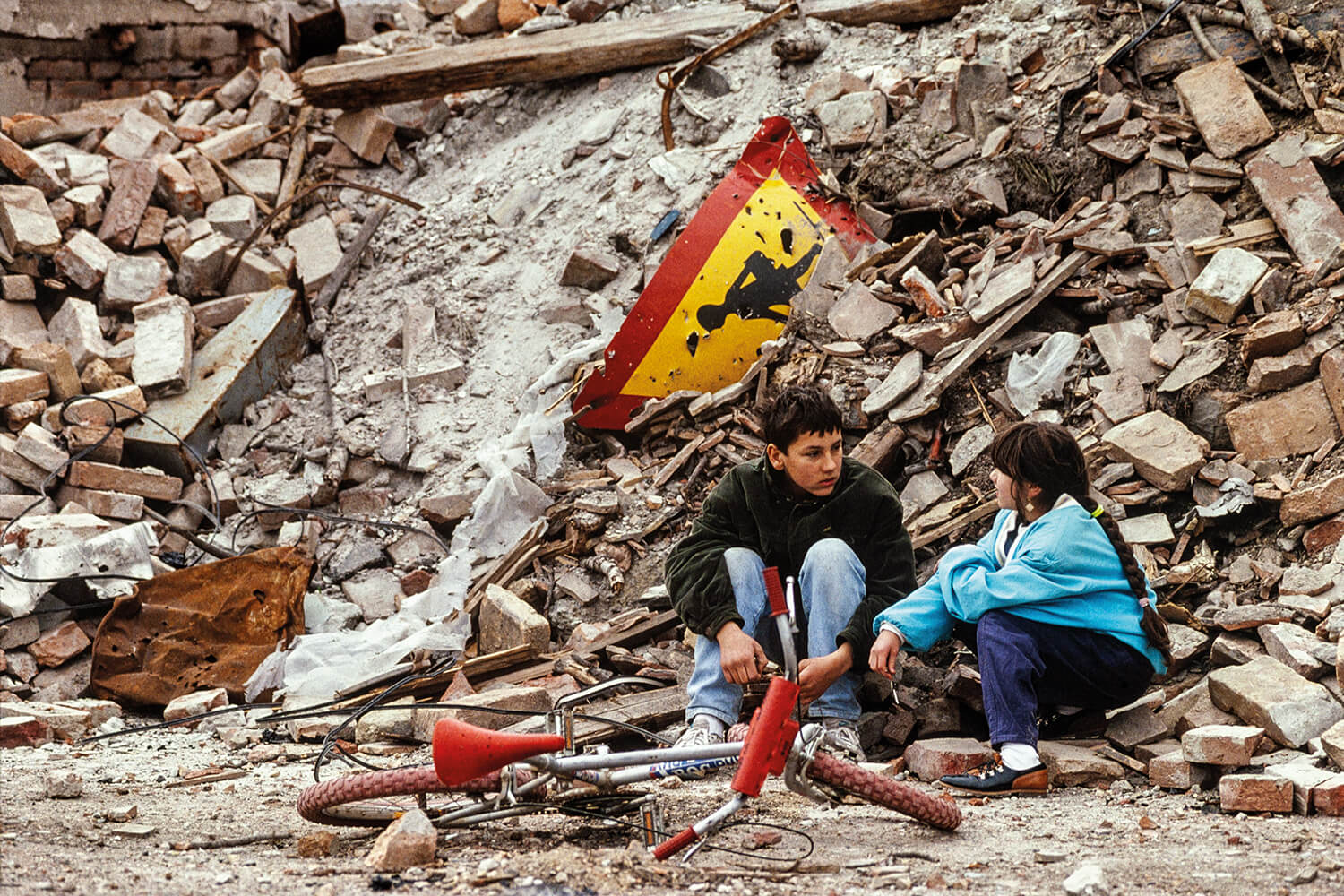
Vukovar – Children Among the Ruins, May 1992. Six months after the Yugoslav People’s Army entered Vukovar, I returned to document the city after the fighting had ended. There were no tanks, no gunfire, no burning buildings anymore, yet the silence that filled the streets was overwhelming. Ruins were everywhere, and only an occasional house showed signs of reconstruction. In this devastated environment, I encountered two children sitting beside a pile of rubble marked by a damaged school traffic sign. Their bicycles lie abandoned in front of them. The scene quietly reveals how childhood continued amid destruction, surrounded by symbols of a normal life that had abruptly disappeared.
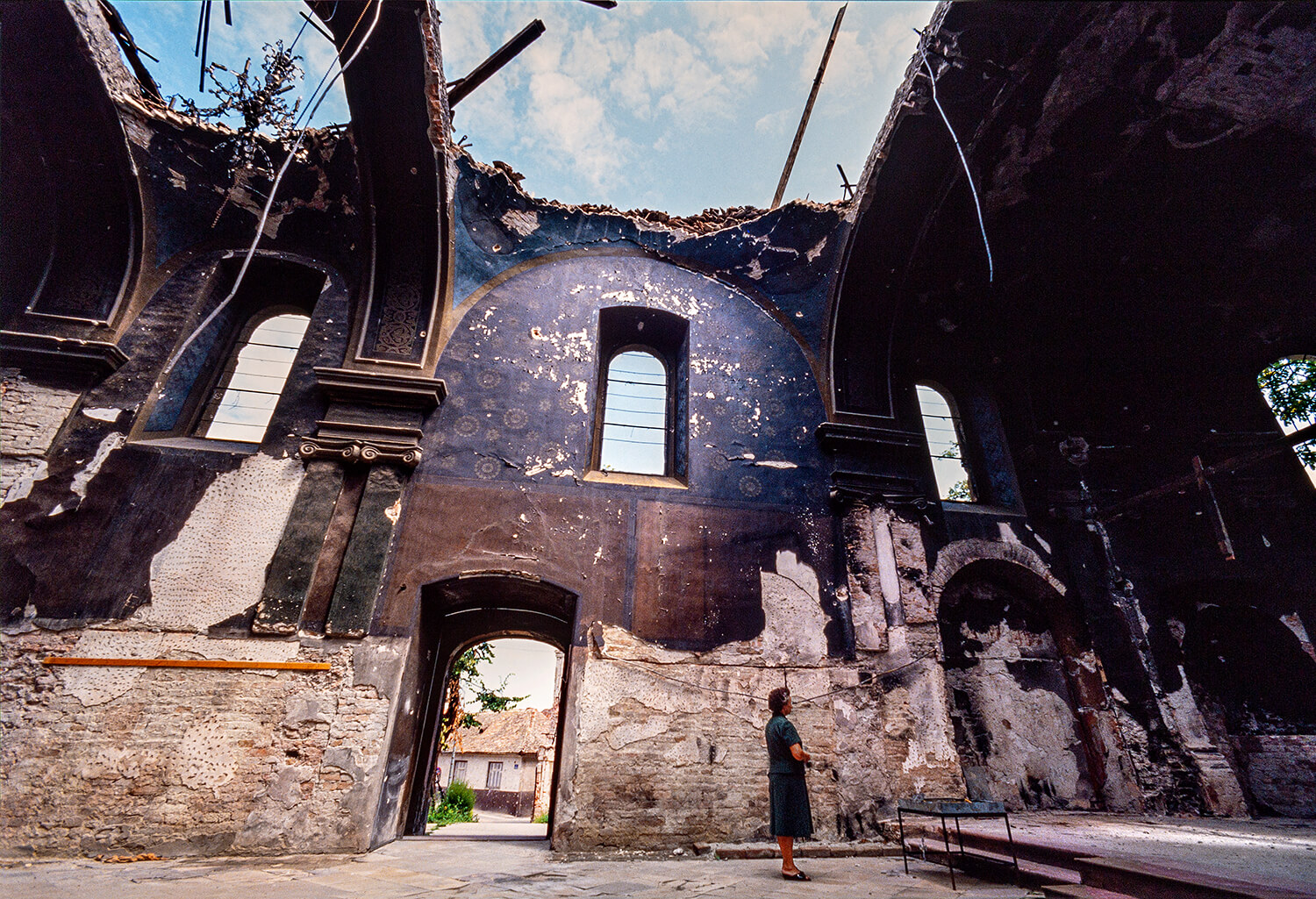
Vukovar – Ruined Church Interior, May 1992. This photograph shows the interior of a heavily damaged church — roofless, stripped to bare walls, and marked by destruction — bearing witness to the scale of devastation and the sudden absence of everyday life.
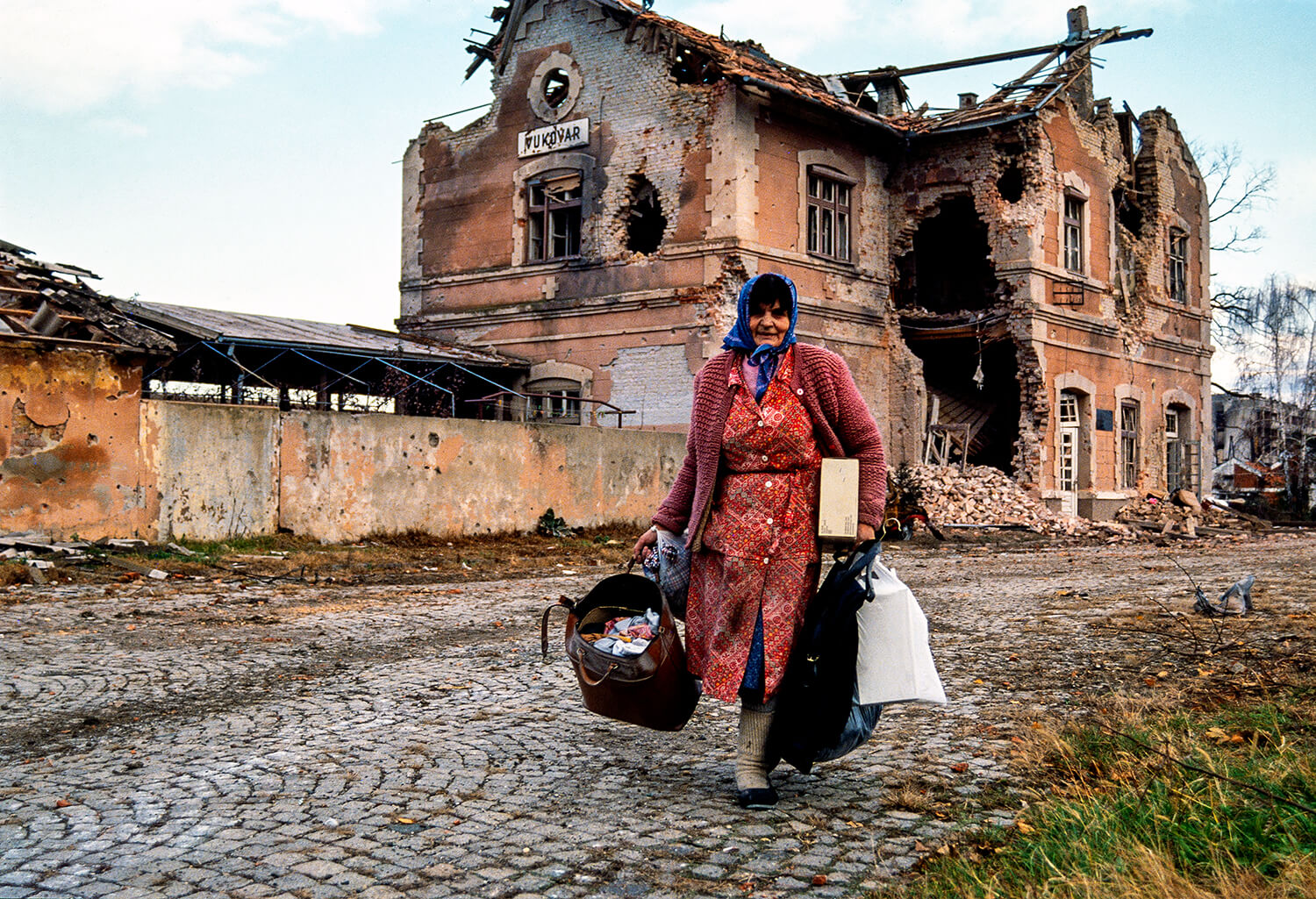
Vukovar – Civilian Life Amid the Ruins of Vukovar, November 18, 1991. A civilian woman walks through the devastated streets of Vukovar, carrying personal belongings salvaged from her destroyed home. Behind her stands the heavily damaged Vukovar railway station, its collapsed roof and shattered façade bearing witness to months of intense shelling and street fighting. The photograph documents the civilian experience of war and displacement during the final days of the siege of Vukovar, capturing a moment of quiet endurance amid widespread destruction.
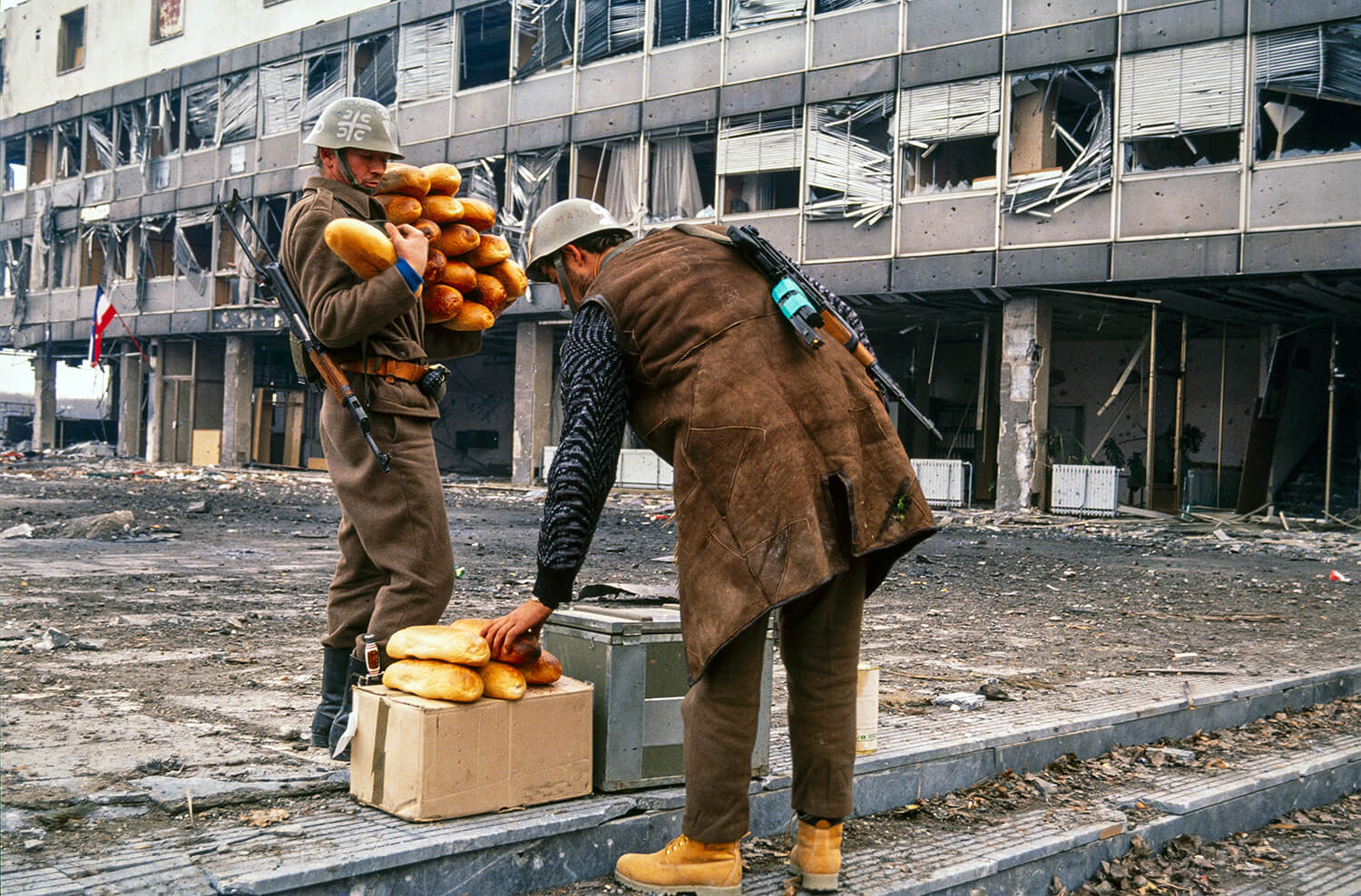
Vukovar – Serbian Soldiers Handling Bread Supplies, November 18, 1991. Serbian soldiers handle loaves of bread in front of a heavily damaged public building in Vukovar following the cessation of major combat operations.
Broken windows, shattered facades, and debris surrounding the site testify to the intensity of fighting and the severe destruction of civilian infrastructure. The photograph documents a moment of logistical routine within a devastated urban environment, highlighting the contrast between everyday necessities and the surrounding ruins of war.
You’ve spoken about the “experience” behind each photograph. How important is the unseen context – the emotions, atmosphere, and memory – to the final image?
Experience accumulates like radiation—it builds over time, consciously and unconsciously. The more you have, the more naturally you arrive at meaningful images. What is invisible—the emotion, atmosphere, memory—is often what gives the photograph its true depth.
How would you decide when to remain an observer and when to engage more directly with your subjects?
By nature, I am a reserved person. I find it uncomfortable to intrude on strangers without permission. However, when I worked briefly in street photography, I used techniques that allowed me to remain unnoticed, capturing natural behavior. Today, in my Roof Art series, people are sometimes present—but never dominant. They serve as a measure, not the subject.
Is there an image you’re especially proud of? Can you tell us about it?
As a child, I often dreamed of opening LIFE magazine and seeing my own photograph inside. In April 1991, that dream became reality. A friend brought me an issue from the United States. When I opened it, I saw my photograph of peppers from Macedonia—credited “Art Zamur/Gamma.”
That was the happiest moment of my career. Although my work was later published many times in LIFE, including a cover, nothing ever matched the intensity of that first moment.
What’s the most important lesson you learnt across your career?
Confidence. During my postgraduate studies, my professor Dragoljub Kažić once told me he was certain my work would one day appear in LIFE. That belief changed me—from an insecure young man into someone convinced he was on the right path.
Finally, for emerging photographers interested in documentary and photojournalism today, what do you believe is the most important mindset or discipline to develop?
I can only speak from my own experience. I never tried to imitate other photographers, no matter how great they were. Unlike in painting, where I copied masters as a child, in photography I always searched for my own way of seeing. That is the only path that leads to something authentic.
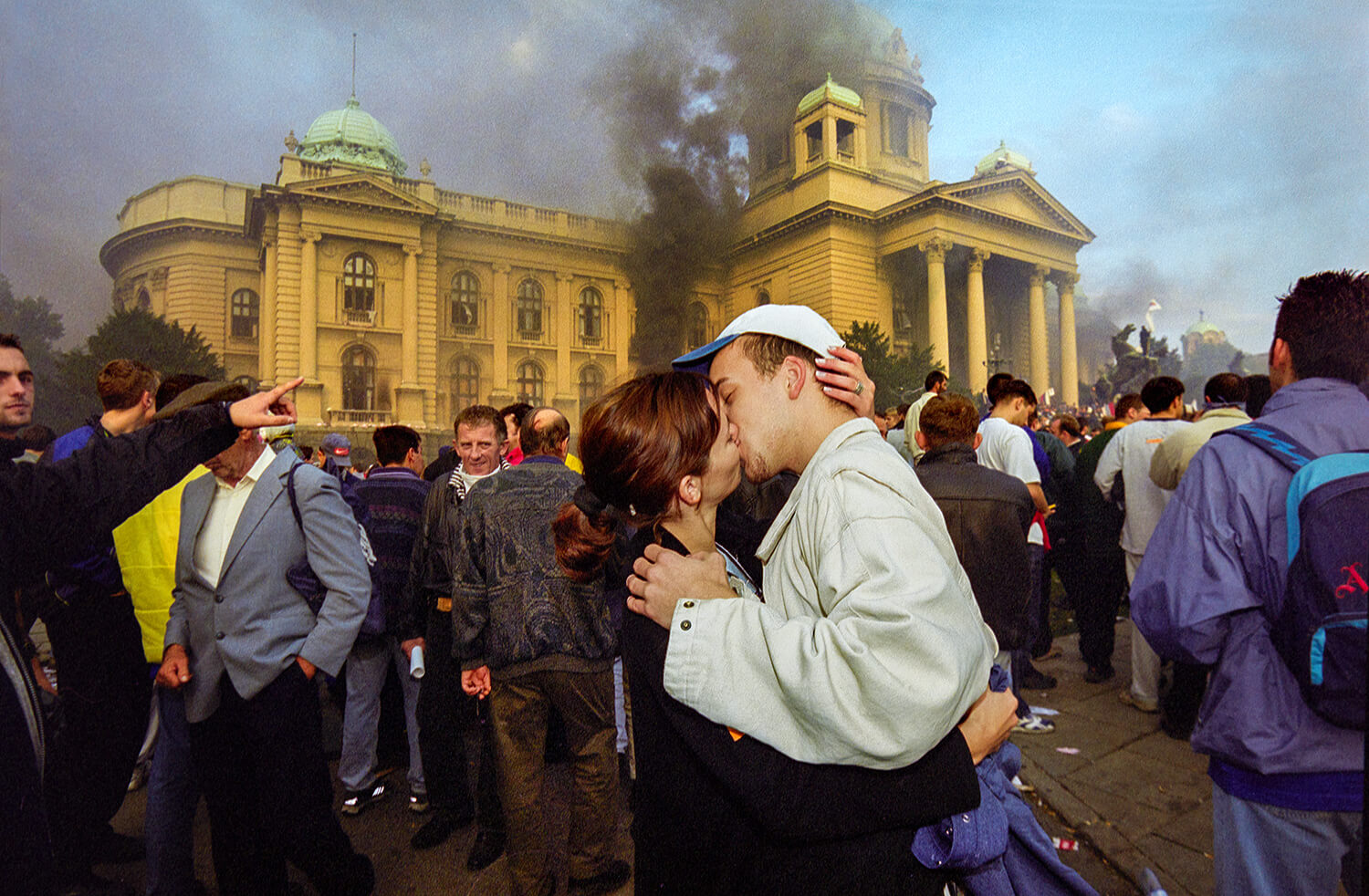
October 5, 2000 – The Fall of Milošević. Amid the chaos of a revolution and the burning of the Parliament building, a young couple shares a kiss — an intimate moment of hope in the middle of political upheaval. This photograph captures the spirit of a nation reclaiming its future, mixing rebellion with tenderness…
All images © Dragoljub Zamurović
Follow him on Instagram: @artzamur and see more on his website: www.artzamur.com