INTERVIEW
Mountains Calling
WITH JUDITH MIJDERWIJK
AN INTERVIEW WITH JUDITH MIJDERWIJK
“My aim is not simply to document what is disappearing, but above all to make the beauty and fragility of this world visible.”
Judith Mijderwijk won our August 2026 Planet Earth competition, with a stunning image of a glacial ice cathedral in Switzerland, which judge Myrtille Delamarche of GEO praised for its creativity and technicality: “The right light, at the right time, in the right place.” A self-proclaimed “mountain photographer”, Judith’s winning image is indictive of her wider vision: to document the beauty and fragility of our planet earth. Keen to know more about that approach, her route into photography and her bucket list destination, we put those questions and several more to her…
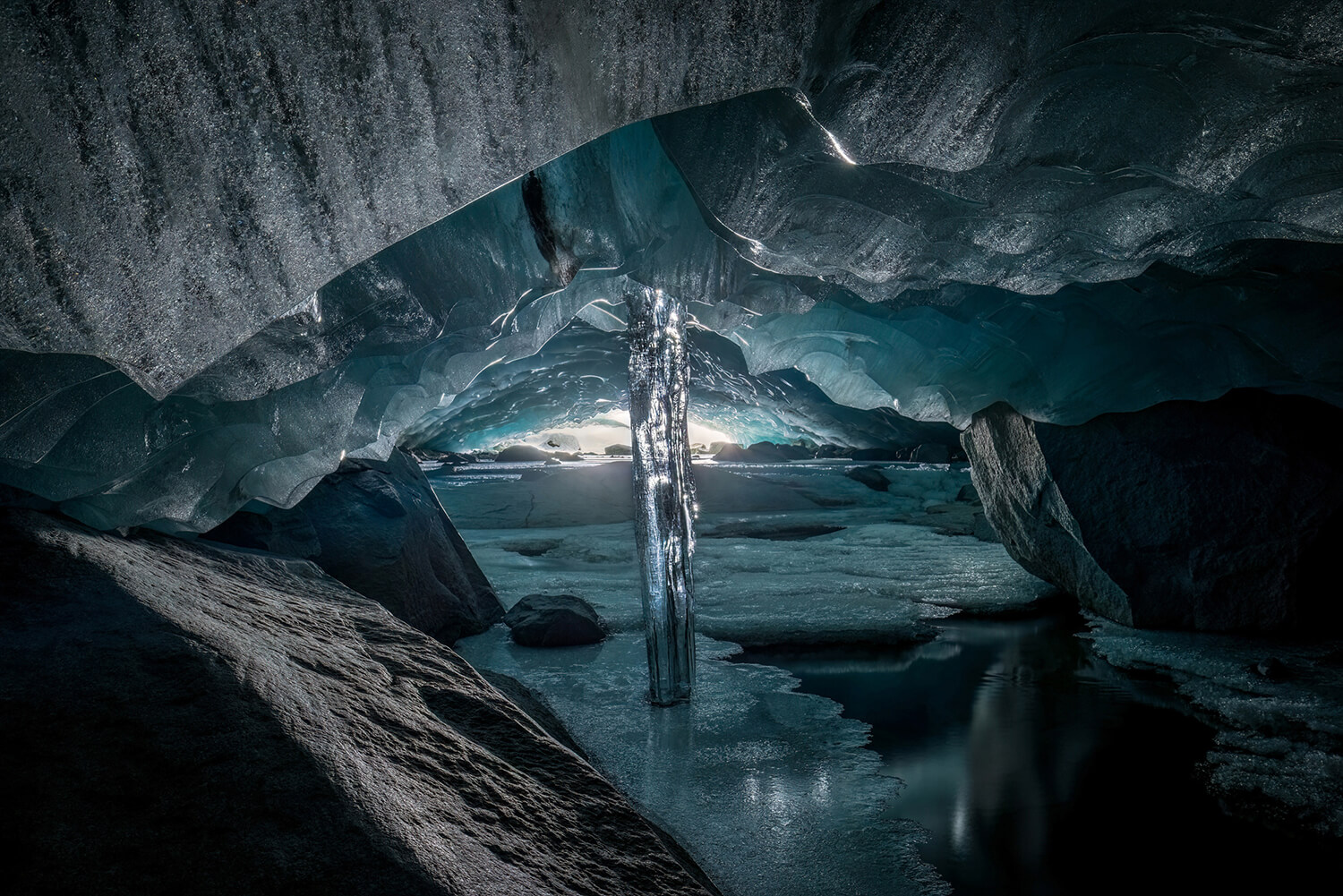
JUDITH’S WINNING IMAGE FOR PLANET EARTH
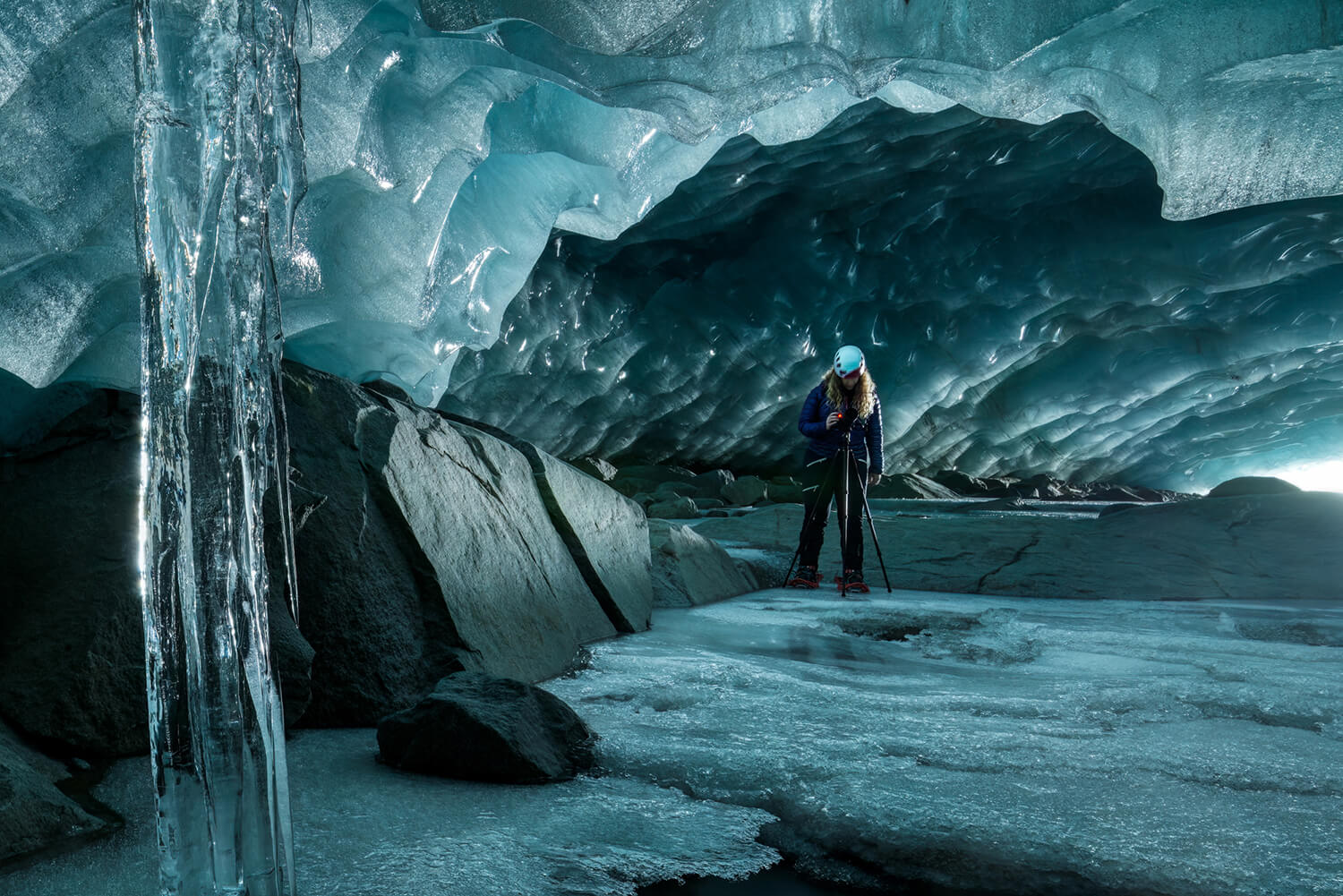
JUDITH AT WORK INSIDE THE GLACIER CAVE — PHOTO: TONI BISCHOF LADIR
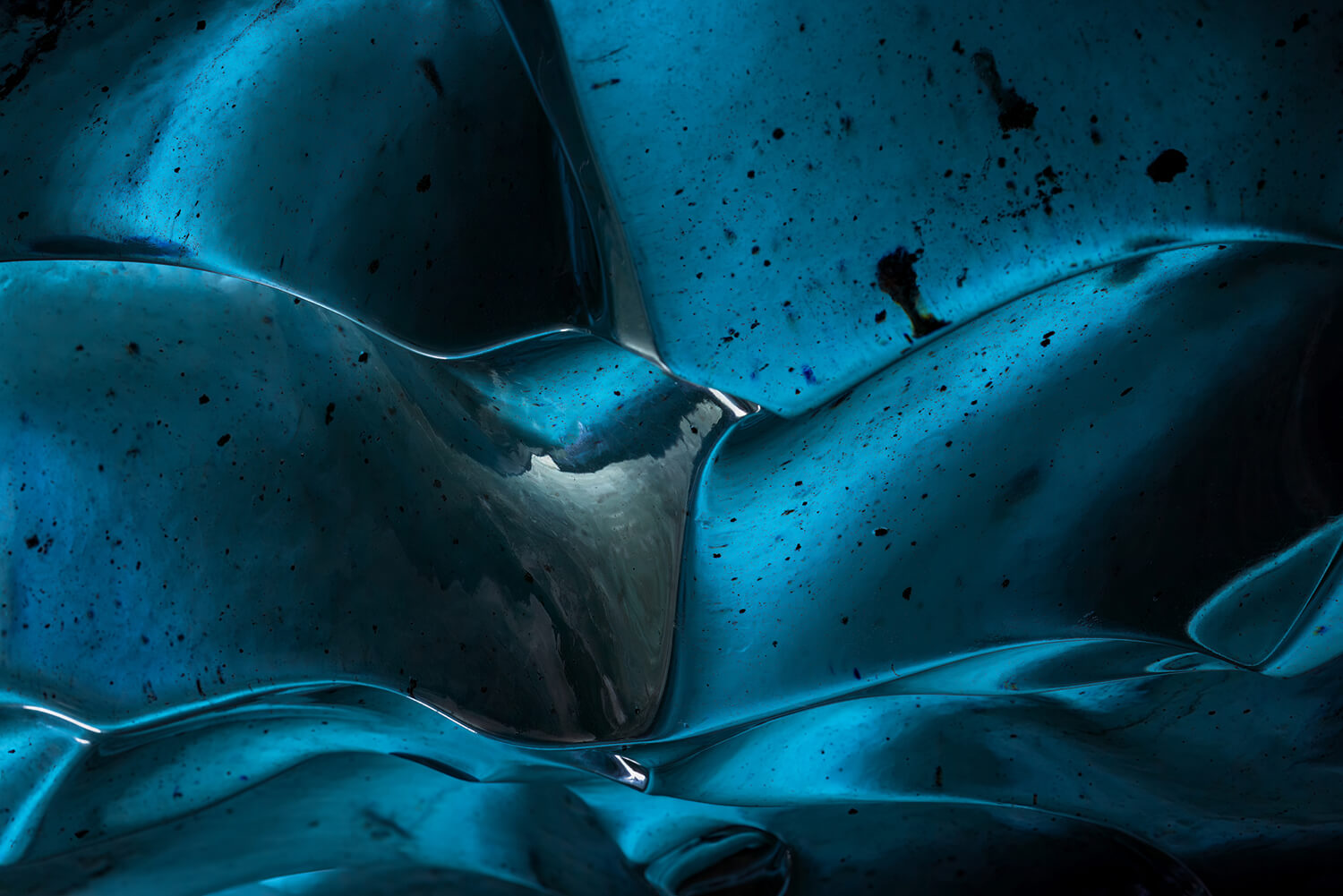
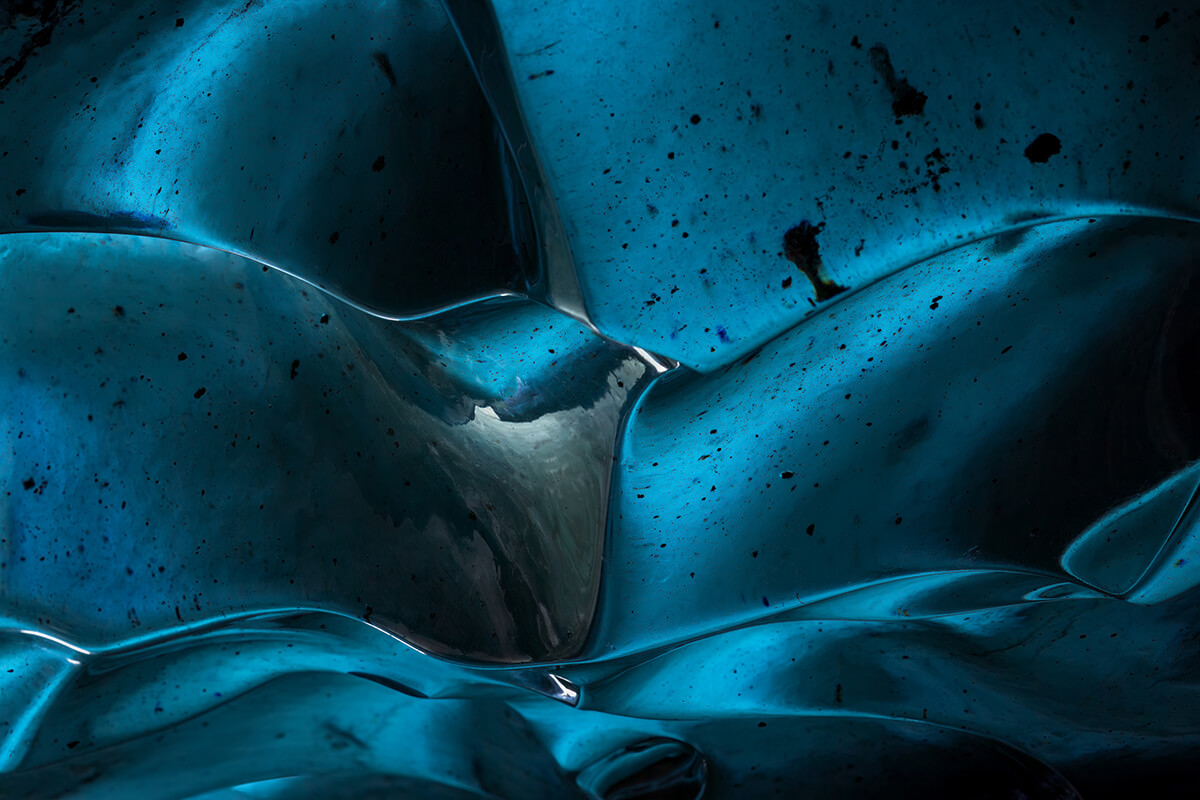
TEAL DREAMS OF ICE
Judith, congratulations on winning our recent Planet Earth competition! Can you introduce yourself in a few words?
Thank you! I’m absolutely delighted with this award, especially because it was this particular image that won. It is very close to my heart and is also the title image of my exhibition project about glaciers.
I’m a Dutch professional photographer based in Austria, although I also spend a lot of time in Switzerland. Much of my photography revolves around the Alps. I mainly photograph mountain landscapes, glaciers and wildlife, but my work also includes newlywed couples and elopements in alpine settings.
The mountains have played an important role in my life since childhood. We used to spend many of our holidays in the Swiss canton of Ticino. I had my own camera from the age of nine, and it went everywhere with me. Photography and the mountains became intertwined very early on. Over the years, my focus has increasingly shifted towards the high mountains, and glaciers in particular.
Tell us a little more about your winning image taken at Morteratsch Glacier – What were the circumstances behind it, and how did you achieve such intensity of colors?
Deep Inside the Glacier was taken inside a glacier cave at the Morteratsch Glacier in the Engadin in the Swiss Alps. These caves form at the terminus of the glacier during some winters and are constantly changing. What fascinates me so much about them is the blue ice and the way light, shapes and structures come together. The moment you enter one of these caves, it almost feels as if you are stepping into a fairytale world.
The cave in which I made this image reminded me of an enormous cathedral of ice. It extended for around eighty metres and consisted of several chambers and impressive ice pillars. That day I was accompanied by a friend who is a former mountain guide and also a photographer. I had been inside the cave before, but never this deep. He showed me what to look out for inside these caves and how to recognise potential hazards in the ice.
For Deep Inside the Glacier, I was positioned far inside the cave. The only natural light came from the entrance, around eighty metres away, which can still be seen in the photograph as a small bright opening in the distance. The contrast between that bright light and the almost completely dark interior of the cave was enormous. I therefore made a series of around ten exposures at different shutter speeds. By combining them afterwards, I was able to retain detail in both the bright entrance and the deep shadows.
This also brought out the intense blue tones of the ice much more strongly. That colour occurs in compact glacier ice because the ice absorbs more of the longer, redder wavelengths of light, while blue light penetrates further. The thicker and more compact the ice, the more intense the blue can become. In the darkest parts of the cave, these colours are much less apparent to the naked eye, but by combining the different exposures I was able to reveal the colours and structures that were already there.
I understand it’s from your series The Fragile Beauty of Glaciers – A Disappearing World. How did this project begin? Why the fascination with glaciers?
I went on my first real glacier tour and climbed my first 3,000-metre peak when I was eighteen. I still remember how impressive it felt to walk across such an enormous mass of ice for the first time. Since then, I have spent more and more time photographing on and around glaciers.
I first visited the Morteratsch Glacier in 2015. I didn’t return for several years, but since 2022 I have gone back every winter, usually spending around five full days each winter in and around the glacier caves.
Quite early in that process, I began to think about turning my glacier photography into a larger project, with both an exhibition and a book. I contacted glaciologists, attended lectures and tried to deepen my understanding of what is happening to the glaciers and how I could tell that story through my photography.
My aim is not simply to document what is disappearing, but above all to make the beauty and fragility of this world visible. I deliberately do not want to rely solely on alarming imagery. I believe beauty can sometimes move people more deeply. At my exhibitions, I can see that people are genuinely moved by the images.
I’m also very happy that the project has recently received international recognition in several ways. My exhibition catalogue received an Honorable Mention at the International Photography Awards 2026, while a photo essay on the same theme, featuring images from the project and originally published in the Dutch mountain magazine Bergen, won second prize in the Professional Editorial / Press – Environmental category. It means a lot to me that not only individual photographs, but also the wider story behind the project is being recognised. The project is by no means finished. I will continue photographing glaciers and, in particular, continue following the Morteratsch Glacier.
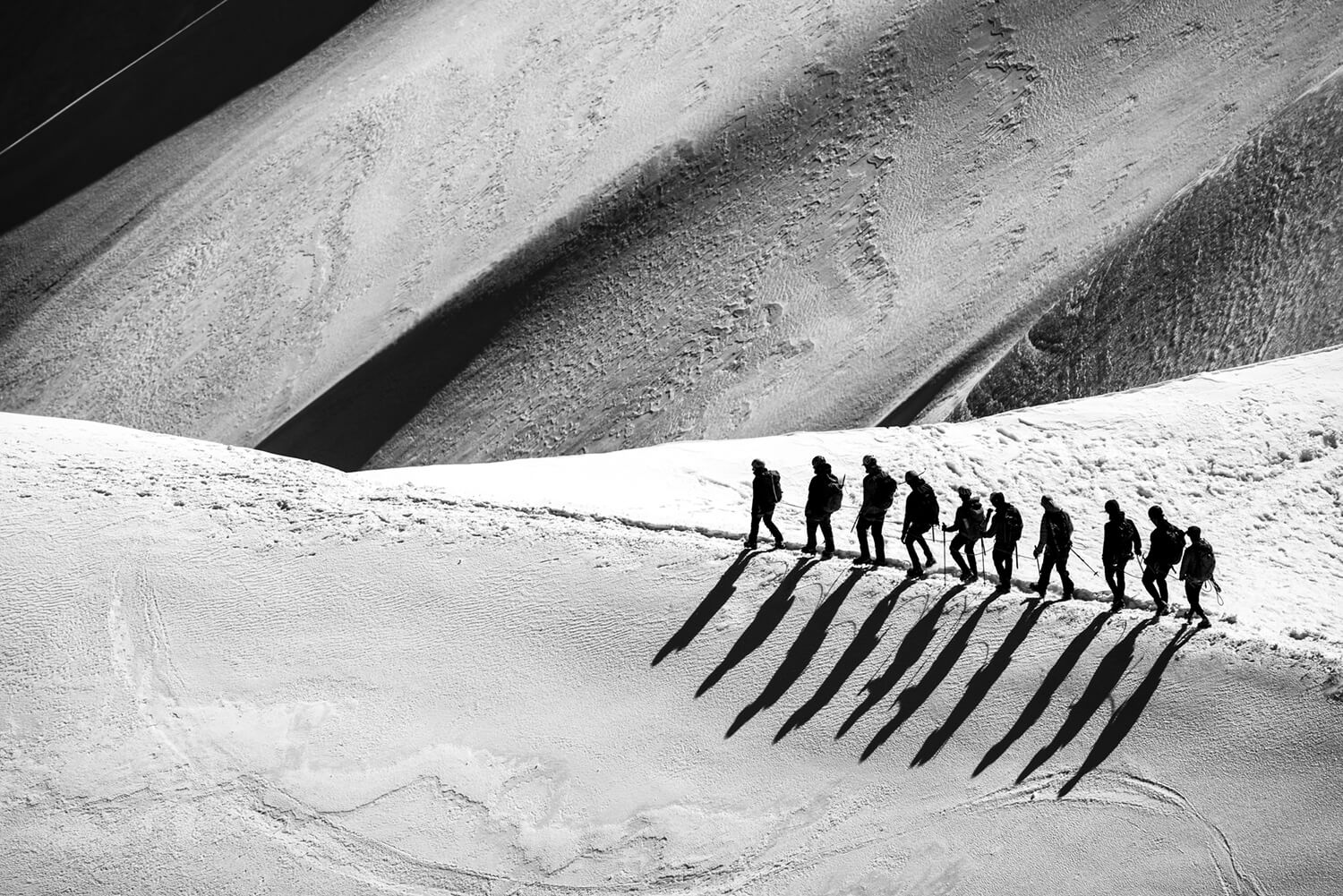
CONNECTION — JUDITH’S FAVORITE SHOT
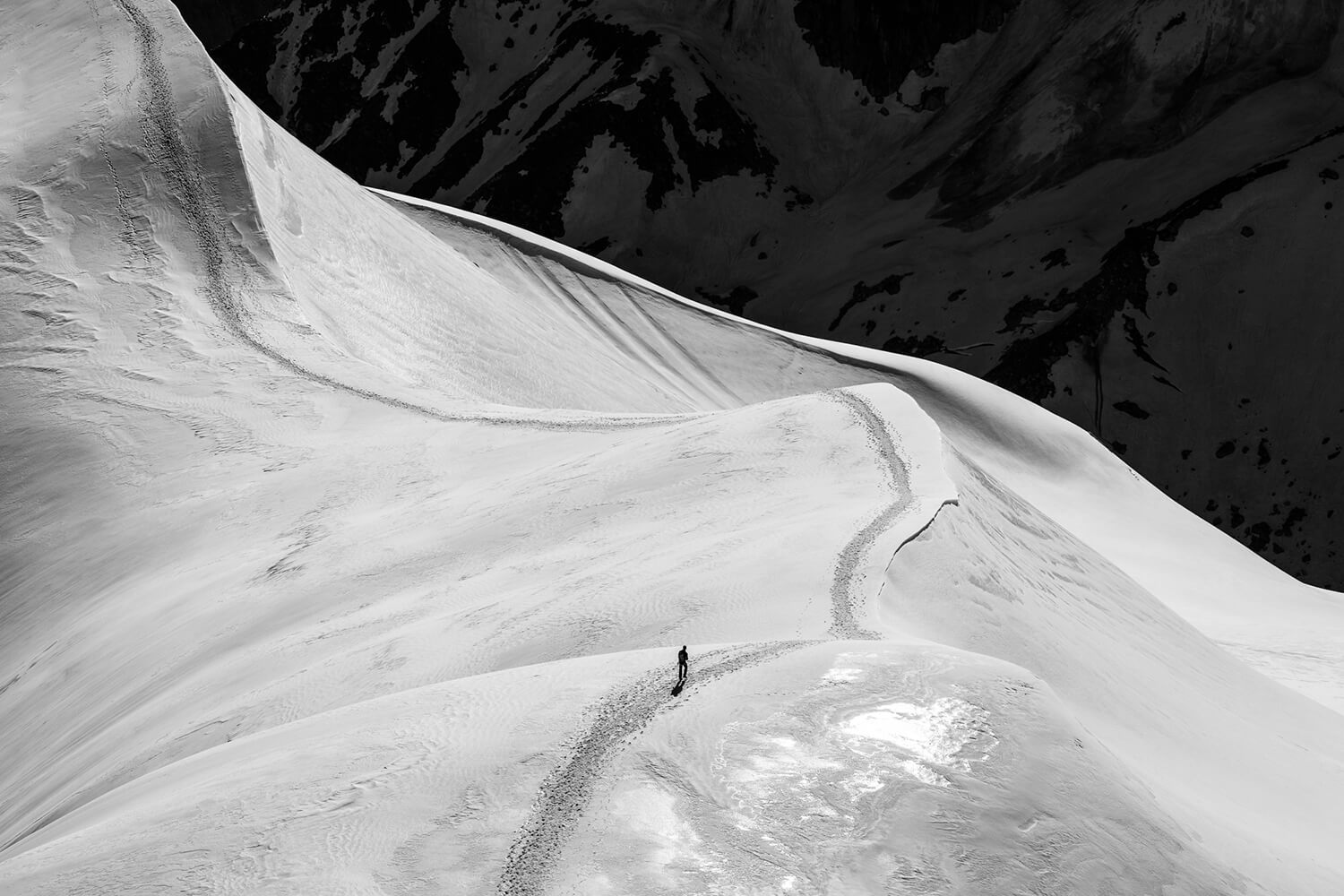
SMALL MAN IN A BIG LANDSCAPE
You come from a family of artists. Why photography? And how do you think this upbringing has influenced your photographic approach?
Creativity was simply a natural part of life in our home. My mother is a visual artist, so as a child I always had all kinds of materials available to experiment with: brushes, paint, canvases, pencils and chalk, but also Plexiglas and materials my mother used to build models. I tried all sorts of things and during secondary school I also took several courses, including watercolour painting and portrait drawing.
Photography had already been a constant thread throughout all of this. From the age of nine, I had a camera that went almost everywhere with me. But for a long time, photography was just one of many ways in which I expressed myself creatively. While studying at university, I worked as a model, and that also gave me plenty of room for creativity. I often came up with striking, brightly coloured looks involving corsets, petticoats, high heels and wigs, combined with bold make-up.
More than ten years ago, after I had suffered a pulmonary embolism, my attention gradually shifted towards photography. I started spending more time in the mountains, began taking my photography more seriously and sold an increasing number of photographs. Eventually, a long-standing passion became my profession, and today I run my own business as a professional photographer.
I think my creative background has influenced, above all, the way I see things. From an early age I was used to working with shapes, colours, lines and compositions, and to experimenting with different ways of creating images. As a child, I was also taken to museums very often. To be honest, at some point I developed quite an aversion to them — fortunately that has long since disappeared! Looking back, I think I absorbed a great deal about composition and visual structure there without even realising it at the time. Photography ultimately became the medium in which all of those influences came together for me.
And you consider yourself a “mountain photographer”. Is it a coincidence that you come from the Netherlands, one of the flattest countries in the world? Do mountains perhaps represent adventure and otherness for you in that sense?
Perhaps that contrast does play a role. In the Netherlands, almost everything feels ordered and managed, and even when you are in a nature reserve there is usually still some sign of human presence: a fence, the sound of a road, buildings on the horizon. It is never very far away.
In the mountains it is completely different. You can walk for hours without encountering any of those things. Sometimes I barely see another person all day, or no one at all, and I absolutely love that. At moments like that I feel completely at one with nature. My attention is entirely focused on what I see and hear — the landscape, the light, the silence and the animals around me. It allows me to clear my mind and really come to rest. The mountains are almost like a natural antidepressant for me. I had always wanted to live in the mountains, so it feels very special that this eventually became reality.
At the same time, I do seek adventure there. I love setting off without knowing exactly what I will encounter along the way. Behind every ridge or rock there may suddenly be something unexpected: an animal, an unusual rock formation or an entirely new view. But for me, adventure definitely does not mean seeking out danger. Quite the opposite: I pay a great deal of attention to safety and try to assess and minimise risks as much as possible.
Mountain and landscape photography is a pursuit with near-infinite vantage points, and ever-changing light, weather and seasons. How do you know when you’ve taken the definitive shot?
It depends very much on the situation. When conditions are changing quickly, I usually start by looking carefully for a composition and then make several photographs as the light or weather changes. Often it is only afterwards that I can see which frame is ultimately the strongest.
But there are also moments when I know very clearly while I am shooting: now everything is right — this is the one. That happens particularly when I am shooting handheld and working more intuitively. And when I later go through the images, it is surprisingly often exactly that one frame that stands out.
These days, I am usually very happy if I come home from an outing with one genuinely strong photograph. I also publish far fewer images than I used to and have become much more critical about what I show. I often return to the same location several times until the conditions are right and I have the image I was looking for.
Interestingly, that wasn’t necessary with the winning image. It was the second of four visits I made to that glacier cave that winter, and I created Deep Inside the Glacier the very first time I ventured that far inside. It was also the first HDR image I had ever made inside a glacier cave.
When photographing glacier caves, I usually come home with several images that I eventually process. I carry a range of lenses and photograph very different subjects: wide views of the cave interiors, the landscape outside, as well as close-up details of the structures, lines and colours within the ice itself.
For me, there is not really such a thing as one definitive photograph of a landscape. Light, weather, season and viewpoint can transform a place completely. That is one of the reasons I keep returning to the same locations.
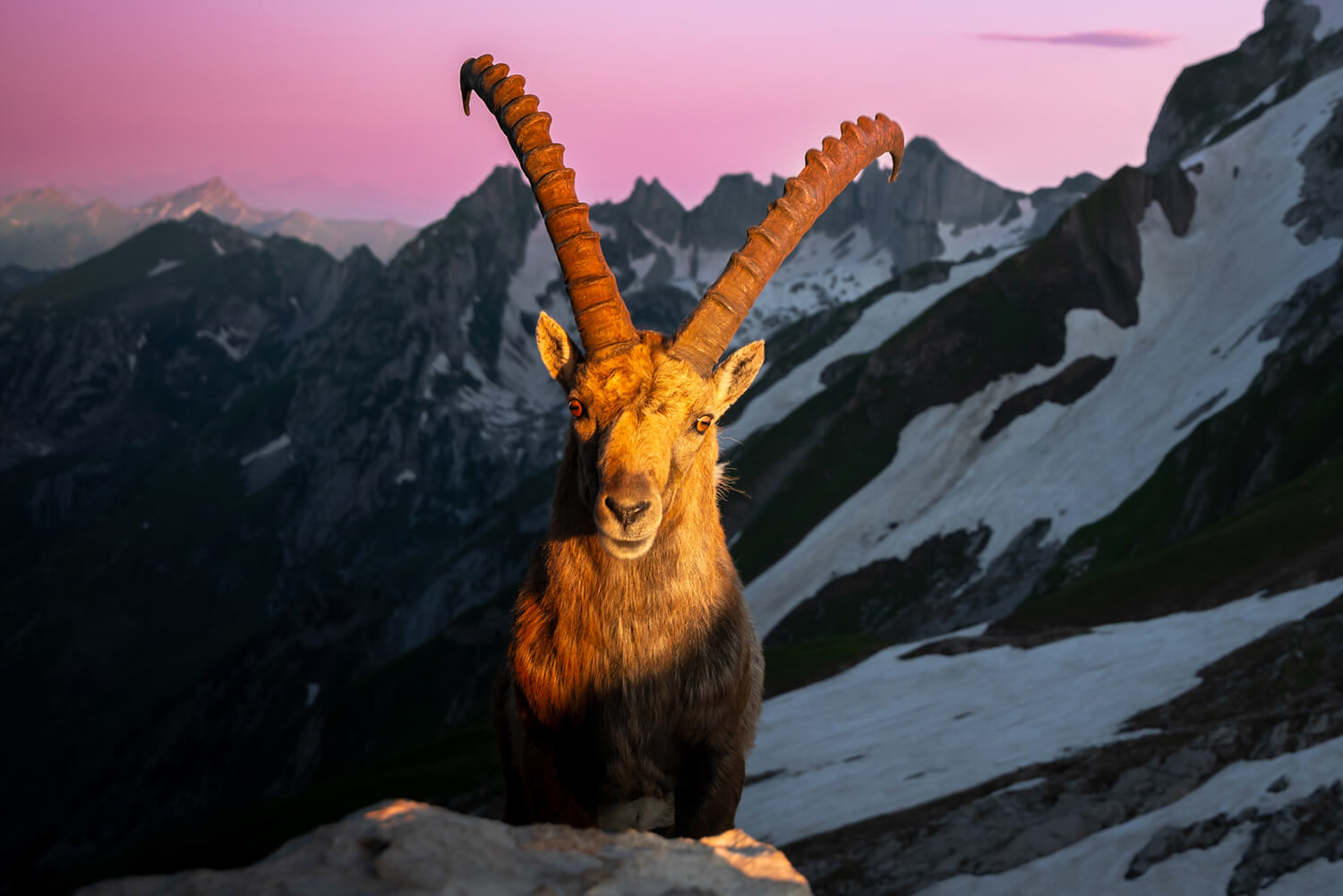
MORNING ENCOUNTER
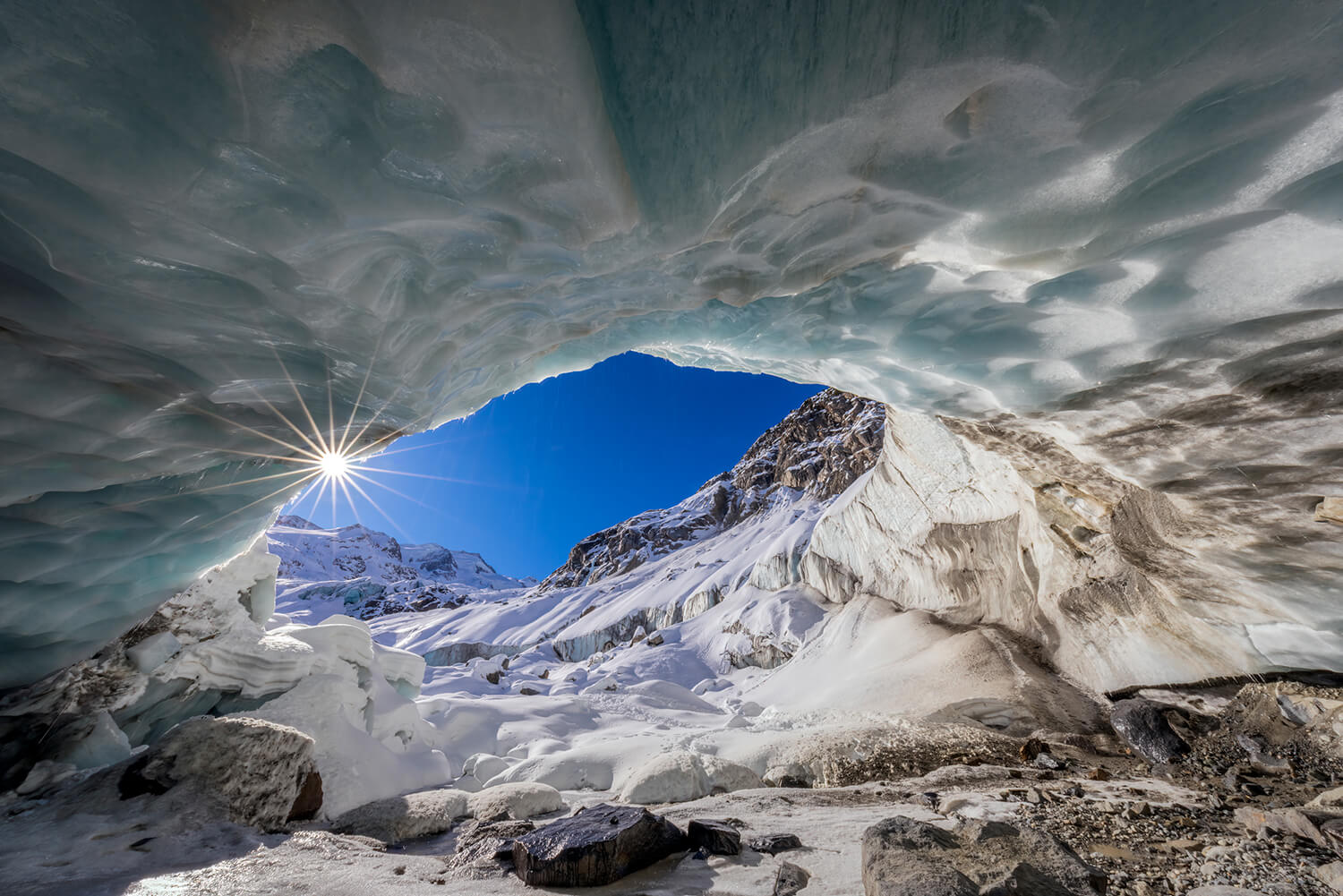
THE ICE CATHEDRAL’S GATE
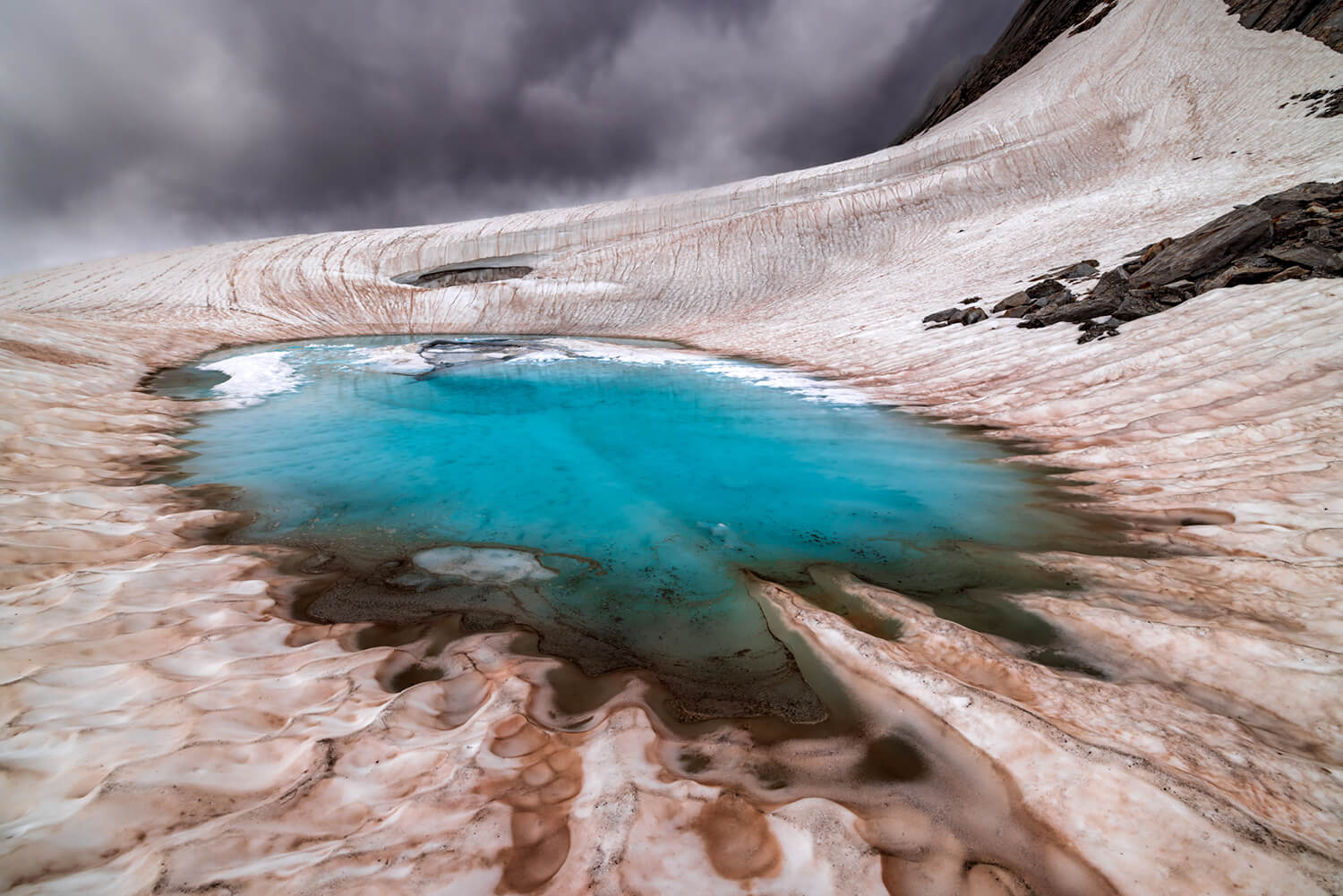
BLUE ICE
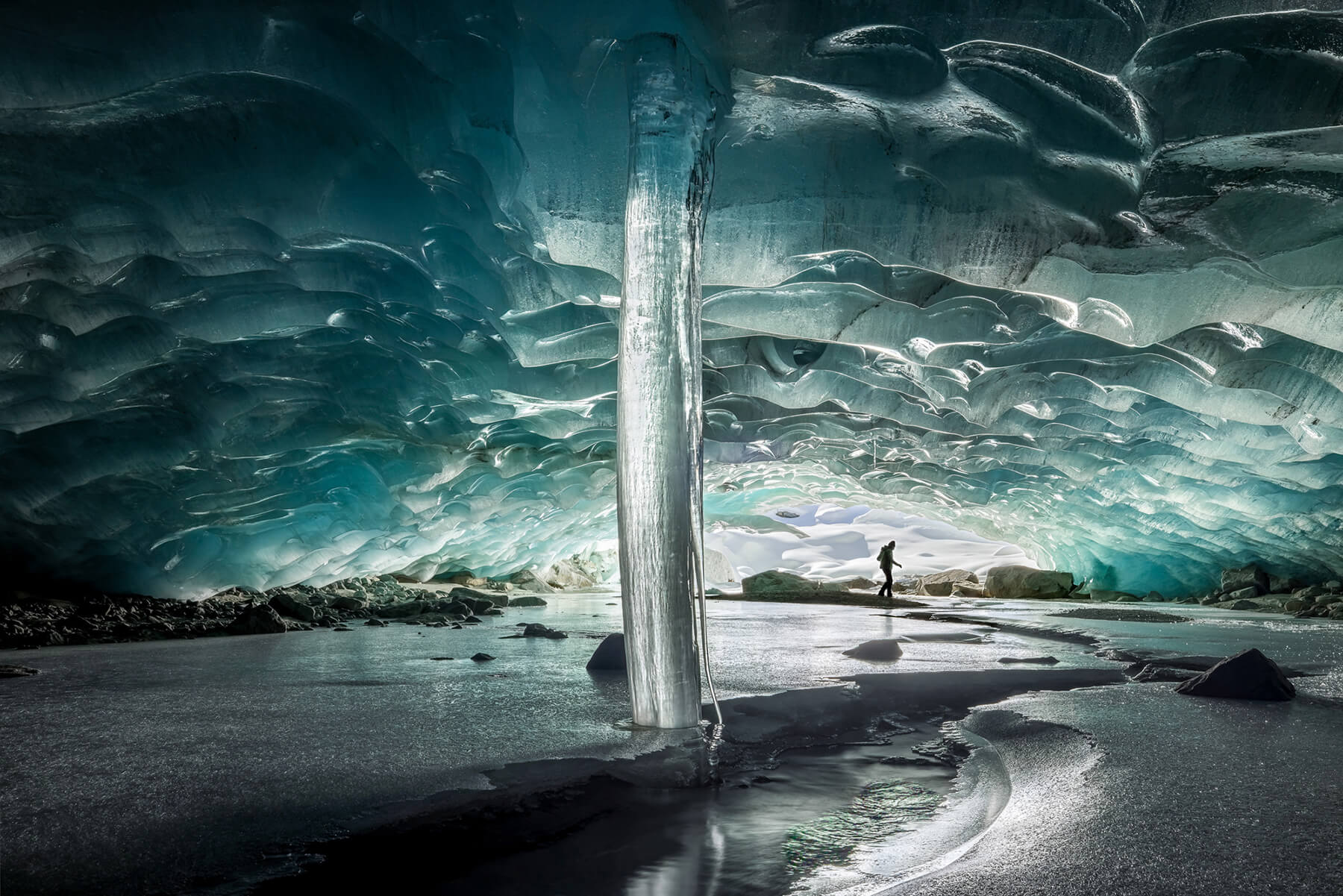
ECHOES OF A FROZEN FAIRYTALE
Who or what inspires you, within or outside of photography?
That is actually quite a difficult question, because my inspiration comes from so many different directions. Within photography, Ansel Adams has certainly been an influence, particularly in the way he approached landscapes and brought composition and light together so powerfully.
My mother is also an important source of inspiration for me. She originally trained and worked as a kindergarten teacher before becoming a visual artist and achieving considerable success with her work. I saw first-hand how you can keep developing creatively and how important it is to follow your own path. I also recognise a great deal of her perfectionism in myself. She could keep working on details until something truly felt right to her, and I have exactly that tendency in my photography.
I also draw inspiration from everything I see in daily life. If you spend a lot of time looking through images online and on social media, over the years an enormous number of photographs pass before your eyes. I do not consciously try to imitate them, but something from that vast visual stream inevitably stays with me: a particular use of light, a composition, a colour combination or an atmosphere.
The internet is also incredibly useful for discovering new places to photograph. At the same time, I enjoy not researching everything in advance. I like to be surprised along the way and quite often set out without knowing exactly what kind of photograph I will eventually make. Sometimes I also bivouac in the mountains without deciding beforehand exactly where I will spend the night. I simply keep going until I find a place that feels right for a photograph at sunset or sunrise.
And ultimately, nature itself is perhaps my greatest source of inspiration: the changing light in the Alps, glaciers, unexpected landscapes and encounters with wildlife. They often lead to images and ideas I could never have planned in advance.
Are there any mountains, or perhaps landscapes more broadly, on your bucket list?
There is still a lot on my list. I would love to search for glacier caves in Austria and France, for example. I also want to get back into mountaineering and eventually climb more 4,000-metre peaks.
I would also like to further develop my photography of athletes in the mountains. I find it fascinating not only to photograph the landscape itself, but also the human presence within it: climbers, mountaineers and other athletes moving through impressive alpine environments.
Iceland is also high on my list. And I would very much like to photograph outside Europe. Patagonia and Nepal are two places that particularly appeal to me.
Aside from your winning image, do you have a favorite you could tell us a little more about?
One of my favourite images besides Deep Inside the Glacier is Connection. It is part of my black-and-white series about alpinists, A Fragile Balance, and received an Honorable Mention at the International Photography Awards this August, shortly after my Life Framer win.
In this series, I often show people as very small figures within vast, almost abstract mountain and glacier landscapes. I want to show that it is not only the glaciers that are fragile — we as humans are fragile too. In such an overwhelming landscape, our smallness and vulnerability become very apparent. At the same time, we deliberately move through these environments, finding our way and trying to relate to the immense forces of nature around us.
In Connection, the alpinists are larger in the frame than they usually are in this series. The image was made in the French Alps and has a very graphic quality: two roped teams appear as silhouettes on a steep, snow-covered mountainside in a kind of moonscape, casting long shadows across the snow. For me, the repetition of the figures, their elongated shadows and the lines within the landscape lend the image a powerful, timeless quality.
In many of the other photographs in the series, the human figures are much smaller and also give the landscape a sense of scale. Without them, it can sometimes be difficult to comprehend how enormous the ice formations and landscapes really are. It is precisely this contrast between the immense surroundings and the human figure that fascinates me.
I photograph this series in black and white because it brings shapes, lines, light and proportions even more strongly to the foreground, sometimes making the landscape appear almost abstract.
Several photographs from A Fragile Balance have now received Honorable Mentions and other distinctions in international competitions, including the International Photography Awards, the Monochrome Awards and the Swiss Photo Club Photo Awards. I find that particularly meaningful because it shows that this more restrained and conceptual side of my work is also being recognised internationally.
What’s the best piece of advice you’d pass on to your younger self if you could?
The main thing I would tell myself is: don’t wait so long to try things simply because you think they might be too difficult, too intimidating or somehow not meant for you.
Although we often travelled to Switzerland, our holidays were not particularly adventurous. Our walks were usually at relatively low altitudes, close to roads or on straightforward mountain trails. It was therefore quite a long time before I dared to head into the mountains alone and start seeking out my own adventures. Looking back, I wish I had done that much earlier.
The same was true of photography. For years I thought shooting entirely in manual mode must be incredibly complicated, partly because I had often seen my mother struggle with her analogue camera when I was younger. As a result, I put it off for a long time myself. When I finally decided simply to try it, I got the hang of it within a few weeks. That taught me that many limitations exist mainly in our own minds.
And I would also tell myself: follow what genuinely excites you and keep believing in it. Looking back, I have now achieved almost everything I used to dream about, and it still feels as though that journey is continuing. Many things that once seemed very far away eventually became reality. That gives me confidence that if you truly commit to something and keep going, far more is often possible than you initially imagine.
And finally, what can we expect from you next?
My glacier project will definitely continue. It is not a finished project: I will keep photographing glaciers, and I will continue following the Morteratsch Glacier in particular. I will certainly return there this coming winter. By revisiting the same places year after year, I can not only photograph the glaciers’ beauty but also show how rapidly they are changing.
The project will also continue travelling through exhibitions and other presentations. This autumn I will present my work at the Chamonix Photo Festival in France and at the Photo+Adventure photography fair in Vienna, Austria. The project has already been exhibited in Switzerland and the Netherlands, and I hope to show it in more countries over the coming years — perhaps eventually outside Europe as well, if I can find the right venues and resources.
I also want to continue developing my photography in the high mountains. I would like to focus even more on wildlife and, as I mentioned earlier, on photographing athletes in mountain environments. There are still so many subjects I want to photograph and places I want to discover, so I am certainly nowhere near finished yet.
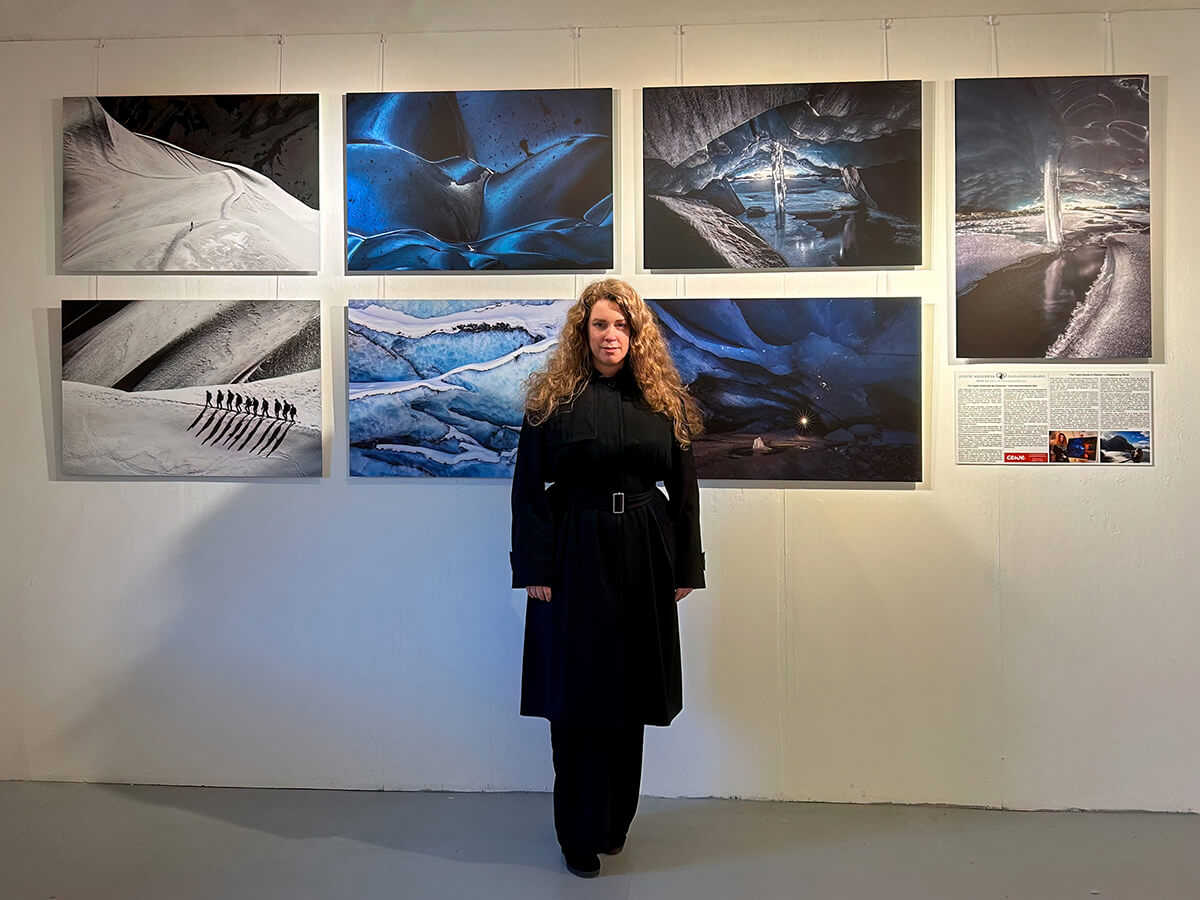
JUDITH MIJDERWIJK — PHOTO: FLAVIO ZOPPI
All images © Judith Mijderwijk
Follow her on Instagram: @felinafoto and see more on her website: www.mountainphotography.eu